Native Plants

Plant Database
Search for native plants by scientific name, common name or family. If you are not sure what you are looking for, try the Combination Search or our Recommended Species lists.
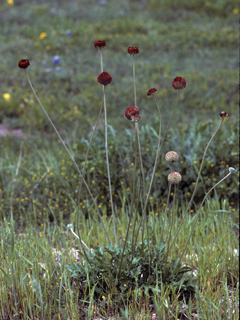
Wasowski, Sally and Andy
Gaillardia suavis
Gaillardia suavis (A. Gray & Engelm.) Britton & Rusby
Pincushion Daisy, Fragrant Gaillardia, Rayless Gaillardia, Perfumeballs
Asteraceae (Aster Family)
Synonym(s): Agassizia suavis, Gaillardia trinervata
USDA Symbol: gasu
USDA Native Status: L48 (N)
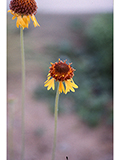
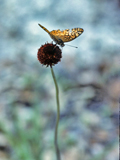
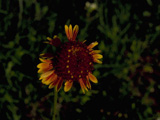
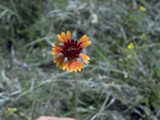
Perfumeballs or Rayless Gaillardia is a slender, upright, clumped perennial, to about 30 in. tall, often forming dense stands. Fragrant, solitary flowers are terminal on leafless stalks. Rays are few, yellow to orange or red, very short, and soon falling off. Reddish-brown disc flowers are numerous, forming a rounded, pincushion-like head. Leaves are all basal.
Not as showy as G. pulchella, but what it lacks in color is made up in fragrance. Adequate moisture and removal of mature flower heads will encourage flowering until fall.
Plant Characteristics
Duration: PerennialHabit: Herb
Size Notes: Up to about 30 inches tall, often shorter.
Fruit: Fruit is a cypsela (pl. cypselae). Though technically incorrect, the fruit is often referred to as an achene.
Bloom Information
Bloom Color: Red , Pink , Purple , BrownBloom Time: Mar , Apr , May , Jun
Bloom Notes: Ray florets usually absent.
Distribution
USA: KS , OK , TXNative Distribution: KS, OK, & TX to Coahuila, Nuevo Leon, and Tamaulipas in northeastern Mexico
Native Habitat: Prairie, Plains, Meadows, Pastures, Savannas, Woodlands' edge, Opening
Growing Conditions
Water Use: MediumLight Requirement: Part Shade
Soil Moisture: Dry
Soil pH: Acidic (pH<6.8)
Soil Description: Sandy, calcareous soils. Clay Loam, Clay, Sandy Loam, Medium Loam
Conditions Comments: The ray petals on pincushion daisy are small and inconspicuous, but what the blooms lack in body, they make up for in fragrance. On a warm day, a mass of blooming pincushion daisy exudes a pleasant aroma. The pompom flower heads lend variety to a garden and to flower arrangements.
Benefit
Use Ornamental: Pocket prairie, Wildflower meadowConspicuous Flowers: yes
Fragrant Flowers: yes
Nectar Source: yes
Value to Beneficial Insects
Special Value to Native BeesThis information was provided by the Pollinator Program at The Xerces Society for Invertebrate Conservation.
Propagation
Propagation Material: SeedsDescription: Easily grown from seed.
Seed Collection: Collect seed in June.
Commercially Avail: yes
Maintenance: Adequate moisture and removal of mature flower heads will encourage flowering until fall.
Find Seed or Plants
Order seed of this species from Native American Seed and help support the Wildflower Center.
From the National Organizations Directory
According to the species list provided by Affiliate Organizations, this plant is on display at the following locations:Fredericksburg Nature Center - Fredericksburg, TX
Lady Bird Johnson Wildflower Center - Austin, TX
Texas Discovery Gardens - Dallas, TX
Sibley Nature Center - Midland, TX
NPSOT - Williamson County Chapter - Georgetown, TX
Wildflower Center Seed Bank
LBJWC-693 Collected 2008-07-02 in Blanco County by Lady Bird Johnson Wildflower CenterBibliography
Bibref 946 - Gardening with Prairie Plants: How to Create Beautiful Native Landscapes (2002) Wasowski, SallyBibref 765 - McMillen's Texas Gardening: Wildflowers (1998) Howard, D.
Bibref 328 - Wildflowers of Texas (2003) Ajilvsgi, Geyata.
Bibref 286 - Wildflowers of the Texas Hill Country (1989) Enquist, M.
Search More Titles in Bibliography
Web Reference
Webref 38 - Flora of North America (2019) Missouri Botanical Garden, St. Louis, MO & Harvard University Herbaria, Cambridge, MA.Additional resources
USDA: Find Gaillardia suavis in USDA PlantsFNA: Find Gaillardia suavis in the Flora of North America (if available)
Google: Search Google for Gaillardia suavis
Metadata
Record Modified: 2022-12-27Research By: TWC Staff