Native Plants

Plant Database
Search for native plants by scientific name, common name or family. If you are not sure what you are looking for, try the Combination Search or our Recommended Species lists.
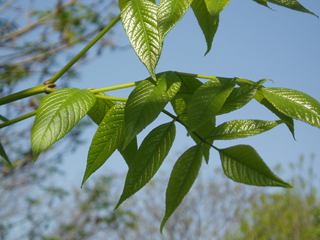
Makin, Julie
Fraxinus quadrangulata
Fraxinus quadrangulata Michx.
Blue Ash
Oleaceae (Olive Family)
Synonym(s):
USDA Symbol: frqu
USDA Native Status: L48 (N), CAN (N)
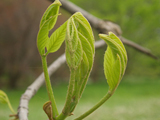
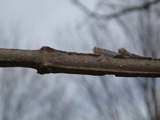
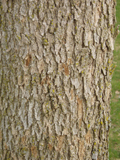
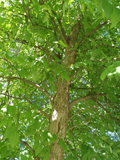
Blue Ash grows 50-80 ft. in height and develops a slender, straight, slightly tapered trunk which supports a narrow, rounded, crown of spreading branches. Young twigs have four winged, corky ridges running lengthwise along the bark. The deciduous foliage is similar to other ashes, turning yellow in fall. The bark is different than other ashes, having a scaly appearance.
The name, quadrangulata, means 4-angled and refers to the 4 corky ridges on the twigs. This characteristic distinguishes blue ash from all other ashes. Another unique feature is the sticky sap from the inner bark, which turns blue when exposed to air
Plant Characteristics
Duration: PerennialHabit: Tree
Leaf Retention: Deciduous
Fruit Type: Samara
Size Notes: Up to about 80 feet tall.
Autumn Foliage: yes
Fruit: Green
Bloom Information
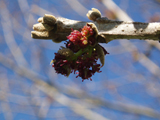
Bloom Color: Green , Purple , BrownBloom Time: Apr , May
Distribution
USA: AL , AR , GA , IA , IL , IN , KS , KY , MI , MN , MO , MS , OH , OK , TN , VA , WI , WVCanada: ON
Native Distribution: Extreme s. Ont., MI & WI, s. to GA, n. AR & extreme s.e. KS
Native Habitat: Lowland wet to upland dry, open woods
Growing Conditions
Light Requirement: Sun , Part ShadeSoil Moisture: Moist , Wet
Soil pH: Circumneutral (pH 6.8-7.2)
Drought Tolerance: High
Soil Description: Variable.
Conditions Comments: Blue ash is fast-growing yet long-lived. It is tolerant of various climates and soils, and is unique among the ashes for its tolerance of drought and alkalinity. The inner bark of the tree reveals blue coloring when mixed with water, giving reason for the common name. Susceptible, like many ashes, to a wide variety of disease and insect pests; these usually are not a problem to vigorously growing trees.
Propagation
Description: Seeds may be sown outdoors after collection or stored and stratified then sown in spring.Seed Treatment: Stratify in moist sand or perlite for 30-60 days at 41 degrees.
Commercially Avail: yes
Web Reference
Webref 80 - Illinois Wildflowers (2002) John HiltyWebref 23 - Southwest Environmental Information Network (2009) SEINet - Arizona Chapter
Additional resources
USDA: Find Fraxinus quadrangulata in USDA PlantsFNA: Find Fraxinus quadrangulata in the Flora of North America (if available)
Google: Search Google for Fraxinus quadrangulata
Metadata
Record Modified: 2023-04-19Research By: TWC Staff