Native Plants

Plant Database
Search for native plants by scientific name, common name or family. If you are not sure what you are looking for, try the Combination Search or our Recommended Species lists.
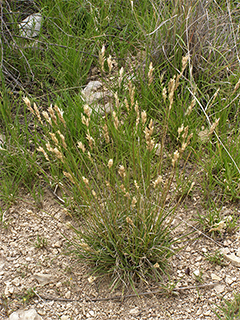
Anderson, Wynn
Erioneuron pilosum
Erioneuron pilosum (Buckley) Nash
Hairy Woollygrass, Hairy Tridens
Poaceae (Grass Family)
Synonym(s): Tridens pilosus, Uralepis pilosa
USDA Symbol: erpi5
USDA Native Status: L48 (N)
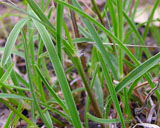
Blades: Thick, narrow, flat, glabrous or hispidulous, 2-8 cm. long, 1-2.5 mm broad. Thick white margin, pointed tip. Culms: 10-30 cm. tall, typically with only 1 node elevated above the basal clusters of leaves. Inflorescence: Contracted panicle or raceme mostly 2-3 cm. long and 10-16 cm broad with 4-9 large, pale spikelets. Fruits: Caryopsis 1.3-1.5 mm. long.
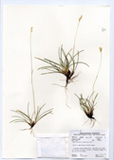
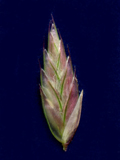
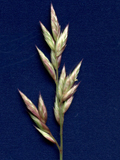

Plant Characteristics
Duration: PerennialHabit: Grass/Grass-like
Root Type: Fibrous
Leaf Arrangement: Alternate
Leaf Complexity: Simple
Leaf Shape: Linear
Leaf Venation: Parallel
Leaf Pubescence: Glabrous
Inflorescence: Panicle
Fruit Type: Caryopsis
Size Notes: This is a low, to about 1 foot tall, tufted perennial with a lovely fluffy inflorescence that is nice in a short grass prairie garden.
Bloom Information
Bloom Color: BrownBloom Time: Apr , May , Jun , Jul , Aug , Sep , Oct
Distribution
USA: AZ , CA , CO , KS , NM , NV , OK , TX , UTNative Distribution: Abundant in far West Texas and the Edwards plateau on prairies and other disturbed areas.
Native Habitat: Well-drained limestone, sand, caliche in open rangelands, pastures, poor areas.
Growing Conditions
Water Use: LowLight Requirement: Sun
Soil Moisture: Dry
Drought Tolerance: High
Heat Tolerant: yes
Soil Description: Limestone-based, Sandy Sandy Loam, Medium Loam, Clay Loam Clay
Conditions Comments: Hairy tridens conforms to a short-grass prairie garden. It provides a good matrix in which to establish wildflowers. Winecup, four-nerve daisy, and blue-eyed grass combine well in plantings with hairy tridens because the grass provides an interesting contrast with its texture.
Benefit
Use Ornamental: Attractive.Use Wildlife: Seeds-granivorous birds; Small mammals-nesting material; Poor forage plant for livestock and wildlife.
Use Other: Some value in retarding soil erosion in dry regions subject to occasional heavy rains.
Conspicuous Flowers: yes
Interesting Foliage: yes
Attracts: Butterflies
Larval Host: The Grass Family is an essential larval food for most branded skippers and most of the satyrs.
Deer Resistant: High
Propagation
Propagation Material: SeedsSeed Treatment: No special pre-treatment.
Commercially Avail: yes
From the National Organizations Directory
According to the species list provided by Affiliate Organizations, this plant is on display at the following locations:Fredericksburg Nature Center - Fredericksburg, TX
Lady Bird Johnson Wildflower Center - Austin, TX
Patsy Glenn Refuge, c/o Wimberley Birding Society - Wimberley, TX
Jacob's Well Natural Area - Wimberley, TX
Herbarium Specimen(s)
NPSOT 0951 Collected Sep 1, 1994 in Bexar County by Harry CliffeNPSOT 1056 Collected Aug 10, 1995 in Comal County by Mary Beth White
Wildflower Center Seed Bank
LBJWC-29 Collected 2006-05-16 in Travis County by Lady Bird Johnson Wildflower CenterBibliography
Bibref 291 - Texas Wildscapes: Gardening for Wildlife (1999) Damude, N. & K.C. BenderSearch More Titles in Bibliography
Web Reference
Webref 3 - Flora of North America (2014) Missouri Botanical Garden, St. Louis, MO & Harvard University Herbaria, Cambridge, MA.Additional resources
USDA: Find Erioneuron pilosum in USDA PlantsFNA: Find Erioneuron pilosum in the Flora of North America (if available)
Google: Search Google for Erioneuron pilosum
Metadata
Record Modified: 2021-09-18Research By: TWC Staff