Native Plants

Plant Database
Search for native plants by scientific name, common name or family. If you are not sure what you are looking for, try the Combination Search or our Recommended Species lists.
Bransford, W.D. and Dolphia
Echinacea pallida
Echinacea pallida (Nutt.) Nutt.
Pale Purple Coneflower, Pale Coneflower
Asteraceae (Aster Family)
Synonym(s): Brauneria pallida, Rudbeckia pallida
USDA Symbol: ecpa
USDA Native Status: L48 (N), CAN (N)
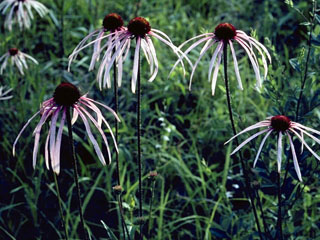
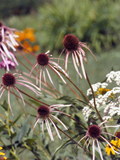
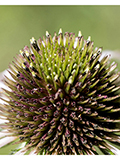
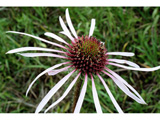
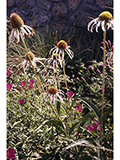
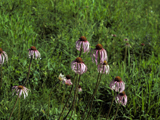
Stout stems, usually 2-4 ft. tall, bear flower heads having lavender, or rarely white, rays drooping from a large, spiny, cone-shaped center. The ray flowers vary in length and width. Coarse-haired, narrowly lance-shaped leaves are attached to the plant near its base.
A sometimes aggressive plant that shows off best and benefits from mixing with grasses. The only Echinacea native to Ontario. (Ontario Native Plants 2002)
Plant Characteristics
Duration: PerennialHabit: Herb
Leaf Retention: Semi-evergreen
Inflorescence: Head
Size Notes: Up to about 4-1/2 feet tall, often shorter.
Leaf: Green
Flower: Flowers 3 to 5 inches across.
Fruit: Dark. Fruit is a cypsela (pl. cypselae). Though technically incorrect, the fruit is often referred to as an achene.
Bloom Information
Bloom Color: Pink , PurpleBloom Time: May , Jun , Jul
Bloom Notes: Color ranges from a pink so pale it almost appears white to rose.
Distribution
USA: AL , AR , CT , GA , IA , IL , IN , KS , LA , MA , ME , MI , MO , NC , NE , OK , SC , TN , TX , VA , WICanada: ON
Native Distribution: WI to e. KS, s. to GA & e. TX; rare east of Mississippi River.
Native Habitat: Prairies; open, wooded hillsides; pinelands
Growing Conditions
Water Use: MediumLight Requirement: Sun
Soil Moisture: Dry , Moist
Soil pH: Alkaline (pH>7.2) , Acidic (pH<6.8) , Circumneutral (pH 6.8-7.2)
CaCO3 Tolerance: Medium
Drought Tolerance: High
Soil Description: Moist to dry, acid or lime soils, preferably rich
Benefit
Use Ornamental: An attractive bloomer for flower gardens and meadows.Use Wildlife: Attracts bees.
Conspicuous Flowers: yes
Attracts: Butterflies
Value to Beneficial Insects
Special Value to Native BeesThis information was provided by the Pollinator Program at The Xerces Society for Invertebrate Conservation.
Propagation
Propagation Material: Root Division , SeedsDescription: Easily transplanted by seed. Division seems to stimulate the development of too many stems and few flowers.
Seed Collection: Collect in Oct. and Nov.
Seed Treatment: Moist stratification improves germination. Sow in fall or spring.
Commercially Avail: yes
Find Seed or Plants
Find seed sources for this species at the Native Seed Network.
View propagation protocol from Native Plants Network.
From the National Organizations Directory
According to the species list provided by Affiliate Organizations, this plant is on display at the following locations:Fredericksburg Nature Center - Fredericksburg, TX
Native Plant Center at Westchester Community College, The - Valhalla, NY
Native Seed Network - Corvallis, OR
Bibliography
Bibref 1620 - Gardening with Native Plants of the South (Reprint Edition) (2009) Wasowski, S. with A. WasowskiBibref 946 - Gardening with Prairie Plants: How to Create Beautiful Native Landscapes (2002) Wasowski, Sally
Bibref 318 - Native Texas Plants: Landscaping Region by Region (2002) Wasowski, S. & A. Wasowski
Bibref 1294 - The Midwestern Native Garden: Native Alternatives to Nonnative Flowers and Plants An Illustrated Guide (2011) Adelman, Charlotte and Schwartz, Bernard L.
Search More Titles in Bibliography
Web Reference
Webref 38 - Flora of North America (2019) Missouri Botanical Garden, St. Louis, MO & Harvard University Herbaria, Cambridge, MA.From the Archive
Wildflower Newsletter 1985 VOL. 2, NO.2 - Guide to Black-Eyed Susan, Parkways, Wildflowers for the East, Arboretum Mall to...Wildflower Newsletter 1996 VOL. 13, NO.2 - Annual Wildflower Days Festival, Wildflower Center Hotline, The Visitor Experien...
Additional resources
USDA: Find Echinacea pallida in USDA PlantsFNA: Find Echinacea pallida in the Flora of North America (if available)
Google: Search Google for Echinacea pallida
Metadata
Record Modified: 2022-12-26Research By: TWC Staff