Native Plants

Plant Database
Search for native plants by scientific name, common name or family. If you are not sure what you are looking for, try the Combination Search or our Recommended Species lists.
Fabre, Carl
Celtis laevigata
Celtis laevigata Willd.
Sugar Hackberry, Texas Sugarberry, Sugarberry, Southern Hackberry, Lowland Hackberry, Hackberry, Palo Blanco
Ulmaceae (Elm Family)
Synonym(s):
USDA Symbol: cela
USDA Native Status: L48 (N)
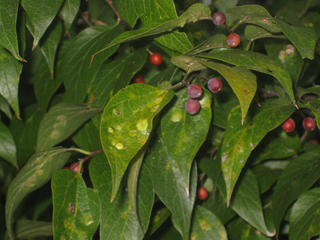
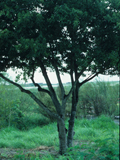
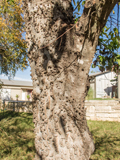
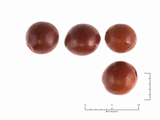
Tree with broad, rounded, open crown of spreading or slightly drooping branches. Sugar hackberry can grow 60-80 ft. in height and equally as wide with a broad crown and graceful, pendulous branches. Its smooth, pale bark is marked with lighter, corky patches. Deciduous leaves up to 4 inches long, blades ovate to narrower with a long, tapering tip, usually with smooth margins and an unequal base which is tapered on one side of the midrib and rounded on the other. Fruit spherical, 1/4 inch in diameter and usually dull red.
Frequently heavily parasitized by mistletoe.

Plant Characteristics
Duration: PerennialHabit: Tree
Leaf Retention: Deciduous
Leaf Arrangement: Alternate
Leaf Complexity: Simple
Leaf Shape: Lanceolate , Ovate
Leaf Apex: Acuminate
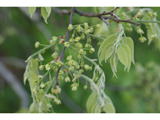
Inflorescence: Axillary
Fruit Type: Drupe
Size Notes: Up to about 80 feet tall.
Leaf: Green
Fruit: Drupe orange-red to black with a solitary pale brown seed inside.
Bloom Information
Bloom Color: GreenBloom Time: Feb , Mar , Apr
Distribution
USA: AL , AR , AZ , CA , CO , DC , FL , GA , ID , IL , IN , KS , KY , LA , MD , MO , MS , NC , NM , NV , OK , OR , SC , TN , TX , UT , VA , WA , WV , WYNative Distribution: S. MD through Coastal Plain and Piedmont to FL, w. to c. IL, n. MO, s.e. KS & TX, south to southern Mexico
Native Habitat: Thickets, open woodlands, stream, river banks
Growing Conditions
Water Use: HighLight Requirement: Part Shade
Soil Moisture: Dry
CaCO3 Tolerance: Medium
Soil Description: Various moist soils. Sandy, Sandy Loam, Medium Loam, Clay, Clay Loam, Caliche type
Benefit
Use Ornamental: It is sometimes used for street planting in the lower South (of the USA). It often comes up in vacant lots and in fencerows, common along streams and in bottomlands.Use Wildlife: At least 10 species of birds including robins, mockingbirds, and other songbirds eat the sweetish fruits.
Use Other: Principal uses of the wood are for furniture, athletic goods, and plywood. It is used to a limited extent for flooring, crating, fuel, cooperage, and posts. The wood is yellowish, close-grained, soft, weak, weighing 49 pounds per cubit feet.
Conspicuous Flowers: yes
Interesting Foliage: yes
Attracts: Butterflies
Deer Resistant: Moderate
Butterflies and Moths of North America (BAMONA)
|
Hackberry Emperor (Asterocampa celtis) 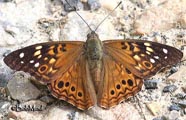 Larval Host |
Propagation
Propagation Material: SeedsDescription: Stratified seed sown in spring or untreated seed sown in fall. Can be rooted from juvenile wood and from root sprouts or suckers.
Seed Collection: Pick mature fruits in late summer until winter. Air-dry with pulp on or soak overnight and rub pulp off on screen. Store in sealed, refrigerated containers.
Seed Treatment: Stratify 60-90 days at 41 degrees.
Commercially Avail: yes
Mr. Smarty Plants says
Edible plants native to Austin, TX
August 05, 2009
Hello,
I am a chef from Buenos Aires Argentina visiting Austin, Texas and would like to learn about native, edible plants in the region.
Please let me know if there are any native, edible plants...
view the full question and answer
National Wetland Indicator Status
| Region: | AGCP | AK | AW | CB | EMP | GP | HI | MW | NCNE | WMVE |
| Status: | FACW | FAC | FACW | FAC | FACW |
From the National Organizations Directory
According to the species list provided by Affiliate Organizations, this plant is on display at the following locations:Lady Bird Johnson Wildflower Center - Austin, TX
Pineywoods Native Plant Center - Nacogdoches, TX
Sibley Nature Center - Midland, TX
Brackenridge Field Laboratory - Austin, TX
Patsy Glenn Refuge, c/o Wimberley Birding Society - Wimberley, TX
Stengl Biological Research Station - Smithville, TX
Texas Parks and Wildlife Department - Austin, TX
Texas Master Naturalists - Lost Pines Chapter - Bastrop, TX
National Butterfly Center - Mission, TX
Jacob's Well Natural Area - Wimberley, TX
NPSOT - Williamson County Chapter - Georgetown, TX
Mt. Cuba Center - Hockessin, DE
Bibliography
Bibref 1186 - Field Guide to Moths of Eastern North America (2005) Covell, C.V., Jr.Bibref 298 - Field Guide to Texas Trees (1999) Simpson, B.J.
Bibref 1185 - Field Guide to Western Butterflies (Peterson Field Guides) (1999) Opler, P.A. and A.B. Wright
Bibref 355 - Landscaping with Native Plants of Texas and the Southwest (1991) Miller, G. O.
Bibref 354 - Native & Naturalized Woody Plants of Austin & the Hill Country (1981) Lynch, D.
Bibref 841 - Native Alternatives to Invasive Plants (2006) Burrell, C. C.
Bibref 318 - Native Texas Plants: Landscaping Region by Region (2002) Wasowski, S. & A. Wasowski
Bibref 291 - Texas Wildscapes: Gardening for Wildlife (1999) Damude, N. & K.C. Bender
Bibref 297 - Trees of Central Texas (1984) Vines, Robert A.
Search More Titles in Bibliography
Additional resources
USDA: Find Celtis laevigata in USDA PlantsFNA: Find Celtis laevigata in the Flora of North America (if available)
Google: Search Google for Celtis laevigata
Metadata
Record Modified: 2016-02-17Research By: NPC