Native Plants

Plant Database
Search for native plants by scientific name, common name or family. If you are not sure what you are looking for, try the Combination Search or our Recommended Species lists.
Wasowski, Sally and Andy
Anemone multifida
Anemone multifida Poir.
Pacific Anemone, Red Windflower, Early Thimbleweed, Cut-leaf Anemone
Ranunculaceae (Buttercup Family)
Synonym(s):
USDA Symbol: anmu
USDA Native Status: L48 (N), AK (N), CAN (N)
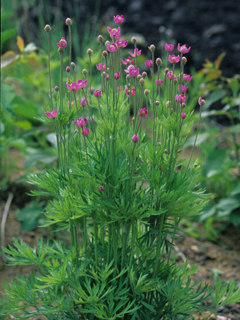
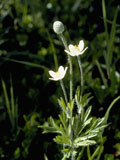
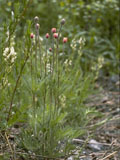
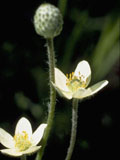
A variable plant, largely determined by ecological conditions, with a number of distinctive races. Generally a loosely clumped perennial with slender, 6-24 in., silky-haired stems and long-petioled leaves divided 2-3 times into narrow segments or lobes. The flowers are yellowish-white within; greenish, yellowish or purplish and silky outside. Some varieties bear bright red sepals. A silky, pinkish seedhead follows the flower.
Because the species is so variable and local, if using it in a native plant garden it is especially important to choose material from nearby sources and habitats that match your site.


Plant Characteristics
Duration: PerennialHabit: Herb
Fruit Type: Achene
Size Notes: Up to about 2 feet tall.
Leaf: Green
Bloom Information
Bloom Color: White , Red , Pink , Yellow , Green , Blue , PurpleBloom Time: Mar , Apr , May , Jun , Jul , Aug
Distribution
USA: AK , AZ , CA , CO , ID , ME , MI , MN , MT , ND , NE , NM , NV , NY , OR , SD , UT , VT , WA , WI , WYCanada: AB , BC , MB , NB , NS , ON , QC , SK
Native Distribution: Nf. to AK, s. locally to n. New England, n. MI, UT & n. CA
Native Habitat: Dryish, gravelly sites; open woods; limestone ridges
Growing Conditions
Water Use: MediumLight Requirement: Sun , Part Shade , Shade
Soil Moisture: Moist
CaCO3 Tolerance: None
Soil Description: Gravelly, calcareous soils.
Conditions Comments: Because the species is so variable & local, it is especially important to choose material from nearby sources and habitats that matches your site.
Benefit
Warning: POISONOUS PARTS: All parts when fresh. Toxic only if eaten in large quantities. Symptoms include inflammation and blistering upon contact with fresh sap and irritation of the mouth, vomiting and diarrhea following ingestion. (Poisonous Plants of N.C.)Conspicuous Flowers: yes
Propagation
Description: Grow from seed sown in fall or early spring. Older plants can be divided in spring.Commercially Avail: yes
Find Seed or Plants
View propagation protocol from Native Plants Network.
Bibliography
Bibref 902 - Ex situ plant conservation : supporting species survival in the wild (2004) Guerrant, E. O.; K. Havens; M. MaunderSearch More Titles in Bibliography
Web Reference
Webref 38 - Flora of North America (2019) Missouri Botanical Garden, St. Louis, MO & Harvard University Herbaria, Cambridge, MA.Webref 23 - Southwest Environmental Information Network (2009) SEINet - Arizona Chapter
Additional resources
USDA: Find Anemone multifida in USDA PlantsFNA: Find Anemone multifida in the Flora of North America (if available)
Google: Search Google for Anemone multifida
Metadata
Record Modified: 2022-11-18Research By: TWC Staff