Native Plants

Plant Database
Search for native plants by scientific name, common name or family. If you are not sure what you are looking for, try the Combination Search or our Recommended Species lists.
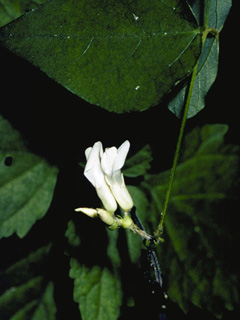
Bruso, George H.
Amphicarpaea bracteata
Amphicarpaea bracteata (L.) Fernald
American Hogpeanut
Fabaceae (Pea Family)
Synonym(s):
USDA Symbol: ambr2
USDA Native Status: L48 (N), CAN (N)
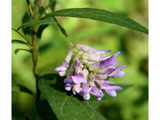
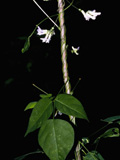
A twining vine with 2 kinds of flowers. Flowers: Those on upper branches 1/2" (1.5 cm) long, pale purple, pale pink, or lilac, in clusters hanging from leaf axils; those on lower or creeping branches inconspicuous, lacking petals.
The genus name is from the Greek amphi ("of both kinds") and carpos ("fruit") and refers to the two kinds of fruit. The seeds of the upper fruit are inedible, but those from the underground fruit are edible when boiled. Birds feed on the seeds of both kinds of fruit. Hogs eat the seeds of the fruit below ground, hence the plant's common name.
Plant Characteristics
Duration: AnnualHabit: Vine
Leaf Arrangement: Alternate
Fruit Type: Legume
Size Notes: Stems twining, up to about 5 feet long.
Bloom Information
Bloom Color: White , Pink , PurpleBloom Time: Aug , Sep
Distribution
USA: AL , AR , CT , DC , DE , FL , GA , IA , IL , IN , KS , KY , LA , MA , MD , ME , MI , MN , MO , MS , MT , NC , ND , NE , NH , NJ , NY , OH , OK , PA , RI , SC , SD , TN , TX , VA , VT , WI , WVCanada: NB , NS
Native Distribution: Manitoba east to Nova Scotia, south to Florida, west to Texas, and north to North Dakota and Montana.
Native Habitat: Woodlands.
Benefit
Attracts: ButterfliesLarval Host: Silver-spotted Skipper (Epargyreus clarus), Northern Cloudywing (Thorybes pylades)
Butterflies and Moths of North America (BAMONA)
|
Silver-spotted Skipper (Epargyreus clarus) 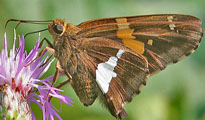 Larval Host |
Northern Cloudywing (Thorybes pylades) 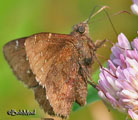 Larval Host |
National Wetland Indicator Status
| Region: | AGCP | AK | AW | CB | EMP | GP | HI | MW | NCNE | WMVE |
| Status: | FAC | FAC | FACU | FAC | FAC | FACU |
From the National Organizations Directory
According to the species list provided by Affiliate Organizations, this plant is on display at the following locations:Natural Biodiversity - Johnstown, PA
Bibliography
Bibref 1186 - Field Guide to Moths of Eastern North America (2005) Covell, C.V., Jr.Bibref 1185 - Field Guide to Western Butterflies (Peterson Field Guides) (1999) Opler, P.A. and A.B. Wright
Search More Titles in Bibliography
Web Reference
Webref 57 - Atlas of Florida Plants (2020) Institute for Systematic BotanyWebref 23 - Southwest Environmental Information Network (2009) SEINet - Arizona Chapter
Additional resources
USDA: Find Amphicarpaea bracteata in USDA PlantsFNA: Find Amphicarpaea bracteata in the Flora of North America (if available)
Google: Search Google for Amphicarpaea bracteata
Metadata
Record Modified: 2022-11-09Research By: TWC Staff