Native Plants

Plant Database
Search for native plants by scientific name, common name or family. If you are not sure what you are looking for, try the Combination Search or our Recommended Species lists.
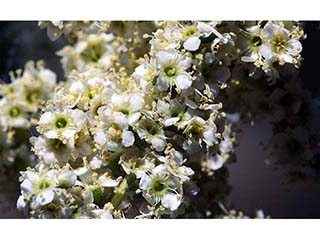
Reveal, James L.
Adenostoma fasciculatum
Adenostoma fasciculatum Hook. & Arn.
Chamise, Common Chamise, Greasewood
Rosaceae (Rose Family)
Synonym(s):
USDA Symbol: adfa
USDA Native Status: L48 (N)
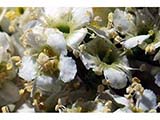
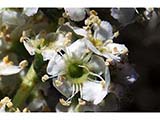
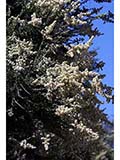
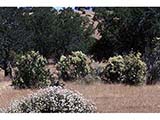
An erect evergreen shrub with alternating clusters of tiny needlelike leaves and large basal burl. 6-10 ft., wide-spreading shrub, with small, linear leaves and reddish bark becoming shreddy with age. Tiny, tubular, white flowers are grouped in showy, terminal clusters.
This is the dominant chaparral plant throughout most of California, often forming pure, impenetrable stands. Also known as Greasewood, the shrub contains highly flammable resins, which cause it to burn rapidly when ignited. Following a fire, Chamise sprouts rapidly from its basal burl (root crown) and soon outgrows most competitors. Chamise further reduces competition by releasing toxins into the soil that inhibit or prevent the growth of most other plants. Chamise becomes dormant during the hottest, driest period of summer, and sheds both branches and bark in an effort to reduce the amount of tissue requiring moisture. These sloughed materials then serve as fuel for the next fire.

Plant Characteristics
Duration: PerennialHabit: Shrub
Leaf Retention: Evergreen
Leaf Arrangement: Alternate , Fascicled
Leaf Complexity: Simple
Leaf Shape: Linear
Leaf Pubescence: Glabrous
Leaf Apex: Acute
Breeding System: Flowers Bisexual
Inflorescence: Panicle
Fruit Type: Achene
Size Notes: Height 2-10 feet, spread to 5 feet.
Leaf: Dark olive-green
Bloom Information
Bloom Color: White , YellowBloom Time: Feb , Mar , Apr , May , Jun , Jul
Bloom Notes: White with pale yellow stamens.
Distribution
USA: CA , NVNative Distribution: Coast Ranges in CA from Mendocino Co. s.; also foothills of Sierra Nevada
Native Habitat: Dry slopes & ridges; chaparral & mesas below 5,000 ft.
Growing Conditions
Water Use: MediumLight Requirement: Sun
Soil Moisture: Dry
CaCO3 Tolerance: Low
Heat Tolerant: yes
Soil Description: Well-drained sand, clay or gravel.
Conditions Comments: Used as a screen or windbreak and as erosion control. This shrub can constitute an extreme fire hazard. Fire resistance is enhanced with a once/month, indirect watering.
Benefit
Use Ornamental: Can be hedged.Use Wildlife: Its principal value to wildlife lies in providing cover, for the tough, resinous foliage is unpalatable.
Interesting Foliage: yes
Fragrant Foliage: yes
Value to Beneficial Insects
Special Value to Native BeesThis information was provided by the Pollinator Program at The Xerces Society for Invertebrate Conservation.
Propagation
Propagation Material: Seeds , Softwood CuttingsDescription: Can be propagated by seed.
Seed Treatment: Hard seed coats require scarification. Soak in H2SO4 for 15 minutes or sow seeds in soil in flats and burn pine needles on the soil surface.
Commercially Avail: yes
Find Seed or Plants
Find seed sources for this species at the Native Seed Network.
From the National Organizations Directory
According to the species list provided by Affiliate Organizations, this plant is on display at the following locations:Santa Barbara Botanic Garden - Santa Barbara, CA
Native Seed Network - Corvallis, OR
Bibliography
Bibref 995 - Native Landscaping from El Paso to L.A. (2000) Wasowski, S. and A. WasowskiBibref 698 - Native Plants for Use in the California Landscape (1978) Labadie, E. L.
Search More Titles in Bibliography
Additional resources
USDA: Find Adenostoma fasciculatum in USDA PlantsFNA: Find Adenostoma fasciculatum in the Flora of North America (if available)
Google: Search Google for Adenostoma fasciculatum
Metadata
Record Modified: 2019-12-06Research By: TWC Staff