Native Plants

Plant Database
Search for native plants by scientific name, common name or family. If you are not sure what you are looking for, try the Combination Search or our Recommended Species lists.
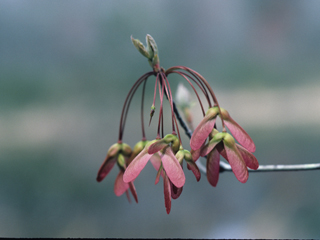
Wasowski, Sally and Andy
Acer rubrum var. drummondii
Acer rubrum L. var. drummondii (Hook. & Arn. ex Nutt.) Sarg.
Drummond's Maple, Drummond Red Maple, Swamp Maple
Aceraceae (Maple Family)
Synonym(s): Acer drummondii, Acer rubrum ssp. drummondii, Rufacer drummondii
USDA Symbol: acrud
USDA Native Status: L48 (N)
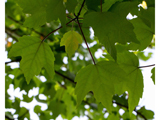
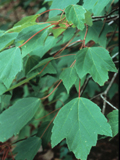
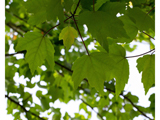
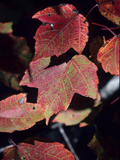
Acer rubrum var. drummondii displays the general characteristics of its species, but has 3- to 5-lobed leaves that are hairy over their entire lower surface. It tends to prefer moist, swampy sites and isn't as cold-hardy as the other A. rubrum varieties, native no farther north than southern Illinois and southern New Jersey. It grows as far west as southeast Texas.
The variety name of this species is named for Thomas Drummond (ca. 1790-1835), naturalist, born in Scotland, around 1790. In 1830 he made a trip to America to collect specimens from the western and southern United States. In March, 1833, he arrived at Velasco, Texas to begin his collecting work in that area. He spent twenty-one months working the area between Galveston Island and the Edwards Plateau, especially along the Brazos, Colorado, and Guadalupe rivers. His collections were the first made in Texas that were extensively distributed among the museums and scientific institutions of the world. He collected 750 species of plants and 150 specimens of birds. Drummond had hoped to make a complete botanical survey of Texas, but he died in Havana, Cuba, in 1835, while making a collecting tour of that island.
Plant Characteristics
Duration: PerennialHabit: Tree
Root Type: Fibrous
Leaf Retention: Deciduous
Leaf Arrangement: Opposite
Leaf Complexity: Palmate
Leaf Venation: Palmate
Leaf Pubescence: Hirsute
Leaf Margin: Serrate
Breeding System: Flowers Unisexual , Dioecious
Fruit Type: Samara
Size Notes: Up to about 80 feet tall.
Leaf: Green, turning red or yellow in fall
Autumn Foliage: yes
Fruit: Red
Bloom Information
Bloom Color: RedBloom Time: Feb , Mar , Apr
Distribution
USA: AL , AR , DE , FL , GA , IL , IN , KY , LA , MO , MS , NC , NJ , SC , TN , TX , VANative Distribution: Southeast Texas north to southern Illinois and east to southern New Jersey and Florida
Native Habitat: Moist, open woodlands and swamps
Growing Conditions
Water Use: MediumLight Requirement: Part Shade
Soil Moisture: Moist , Wet
Soil pH: Acidic (pH<6.8)
Drought Tolerance: Low
Heat Tolerant: yes
Soil Description: Moist to wet, acidic sands, sandy loams, medium loams, clay loams, and clays
Conditions Comments: Occurs naturally in moist woods and swamps
Benefit
Use Ornamental: Showy, attractive shade tree with conspicuous fall color and decorative, red male flowers and female samaras in springUse Wildlife: Seeds consumed by a variety of birds and squirrels, leaves eaten by deer. Entire plant relied on by a number of moths and other insects.
Conspicuous Flowers: yes
Interesting Foliage: yes
Attracts: Birds
Larval Host: A number of sphinx moths
Deer Resistant: No
Propagation
Propagation Material: SeedsFrom the National Organizations Directory
According to the species list provided by Affiliate Organizations, this plant is on display at the following locations:Crosby Arboretum - Picayune, MS
Texas Parks and Wildlife Department - Austin, TX
Mt. Cuba Center - Hockessin, DE
Wellspring Organic Farm and Education Center - West Bend, WI
Bibliography
Bibref 481 - How to Grow Native Plants of Texas and the Southwest: Revised and Updated Edition (2001) Nokes, J.Bibref 293 - Manual of the Vascular Plants of Texas (1979) Correll, D. S. & M. C. Johnston
Bibref 318 - Native Texas Plants: Landscaping Region by Region (2002) Wasowski, S. & A. Wasowski
Bibref 281 - Shinners & Mahler's Illustrated Flora of North Central Texas (1999) Diggs, G. M.; B. L. Lipscomb; B. O'Kennon; W. F...
Bibref 291 - Texas Wildscapes: Gardening for Wildlife (1999) Damude, N. & K.C. Bender
Search More Titles in Bibliography
Additional resources
USDA: Find Acer rubrum var. drummondii in USDA PlantsFNA: Find Acer rubrum var. drummondii in the Flora of North America (if available)
Google: Search Google for Acer rubrum var. drummondii
Metadata
Record Modified: 2012-11-13Research By: TWC Staff, GDG