Native Plants

Plant Database
Search for native plants by scientific name, common name or family. If you are not sure what you are looking for, try the Combination Search or our Recommended Species lists.
Marcus, Joseph A.
Abutilon fruticosum
Abutilon fruticosum Guill. & Perr.
Indian Mallow, Texas Indian Mallow
Malvaceae (Mallow Family)
Synonym(s): Abutilon texense
USDA Symbol: abfr3
USDA Native Status: L48 (N)
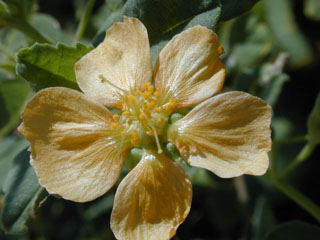
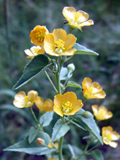
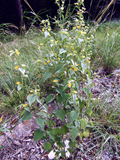
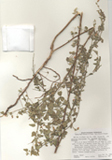
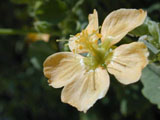
Herbaceous perennial with several stems, woody at the base and much branched above, densely hairy, 2-3 ft. high. Leaves thickish, mostly ovate-cordate, sharp to tapering point, irregularly serrate, with minute star shaped hairs underneath, to 4" long, smaller on the branchlets. Flowers solitary, in the angle between the leaves and stems, from 3/8" to 1" wide, with orange-yellow petals and 5 to 6 simple pistils. Young seeds smooth developing minute soft grayish hairs with age.
Performs well in dry areas in both sun and part shade. Readily propagated from seed. Tough fibers from the stems have been used as cordage for making ropes or in weaving. Readily eaten by deer and some livestock. Young foliage is a larval plant food for several species of skipper butterflies.

Plant Characteristics
Duration: PerennialHabit: Herb
Root Type: Tap
Leaf Retention: Deciduous
Leaf Arrangement: Alternate
Leaf Complexity: Simple
Leaf Shape: Ovate
Leaf Venation: Palmate
Leaf Pubescence: Stellate
Leaf Margin: Serrate
Leaf Apex: Acute
Leaf Base: Cordate
Breeding System: Flowers Bisexual
Fruit Type: Schizocarp
Size Notes: Up to about 3 feet tall.
Leaf: Green with minute grayish hairs
Flower: Flowers 3/8-1 inch. Sepals 2-4 mm long
Fruit: 6-9 mm
Bloom Information
Bloom Color: Orange , YellowBloom Time: Jun , Jul , Aug , Sep , Oct
Bloom Notes: 5 petal flowers solitary, in the angle between the leaves and stems, from 3/8" to 1" wide, with orange-yellow petals.
Distribution
USA: AR , OK , TXNative Habitat: Dry areas on cliffs, slopes, limestone outcrops, prairies, and in open woods and chaparral.
Growing Conditions
Water Use: LowLight Requirement: Sun
Soil Moisture: Dry
Heat Tolerant: yes
Soil Description: Found in dry areas on cliffs, slopes, limestone outcrops, prairies, and in open woods and chaparral. Soil is typically alkaline.
Conditions Comments: Plant in well drained soil in sun to part shade
Benefit
Use Ornamental: Drought-tolerant; suitable for xeriscaping.Use Wildlife: Readily eaten by deer.
Use Food: Readily eaten by sheep and goats. The seeds are eaten by bobwhite quail and mourning doves.
Use Other: Tough fibers from stems can be used to make cordage for ropes or for use in weaving.
Conspicuous Flowers: yes
Attracts: Birds , Butterflies
Larval Host: Larval plant food for several species of skipper butterflies.
Propagation
Propagation Material: SeedsDescription: Sow seed after last frost.
Seed Collection: Allow pods to dry on plant and break open to collect seeds.
From the National Organizations Directory
According to the species list provided by Affiliate Organizations, this plant is on display at the following locations:Naval Air Station Kingsville - Kingsville, TX
Lady Bird Johnson Wildflower Center - Austin, TX
Patsy Glenn Refuge, c/o Wimberley Birding Society - Wimberley, TX
Nueces River Authority - Uvalde, TX
National Butterfly Center - Mission, TX
Jacob's Well Natural Area - Wimberley, TX
Wildflower Center Seed Bank
LBJWC-36 Collected 2006-06-02 in Travis County by Lady Bird Johnson Wildflower CenterAdditional resources
USDA: Find Abutilon fruticosum in USDA PlantsFNA: Find Abutilon fruticosum in the Flora of North America (if available)
Google: Search Google for Abutilon fruticosum
Metadata
Record Modified: 2007-01-01Research By: JSC