Native Plants

Plant Database
Search for native plants by scientific name, common name or family. If you are not sure what you are looking for, try the Combination Search or our Recommended Species lists.
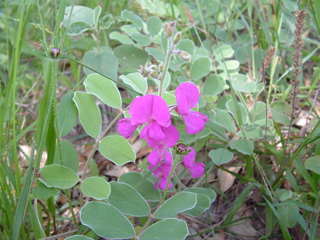
Carr, Bill
Tephrosia lindheimeri
Tephrosia lindheimeri A. Gray
Lindheimer's Hoarypea, Hoary Pea, Lindheimer Tephrosia
Fabaceae (Pea Family)
Synonym(s):
USDA Symbol: TELI
USDA Native Status: L48 (N)
This species is named after Ferdinand Jacob Lindheimer (1801-1879) who is often called the Father of Texas Botany because of his work as the first permanent-resident plant collector in Texas. In 1834 Lindheimer immigrated to the United States as a political refugee. He spent from 1843-1852 collecting specimens in Texas. In 1844 he settled in New Braunfels, Texas, and was granted land on the banks of the Comal River, where he continued his plant collecting and attempted to establish a botanical garden. He shared his findings with many others who shared his interest in botany, including Ferdinand von Roemer and Adolph Scheele. Lindheimer is credited with the discovery of several hundred plant species. In addition his name is used to designate forty-eight species and subspecies of plants. He is buried in New Braunfels. His house, on Comal Street in New Braunfels, is now a museum.


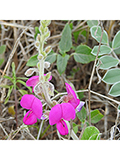
Plant Characteristics
Duration: PerennialHabit: Subshrub
Leaf Retention: Evergreen
Leaf Arrangement: Alternate
Fruit Type: Legume
Size Notes: Stems erect to trailing, up to about 16 inches long.
Bloom Information
Bloom Color: Red , PurpleBloom Time: Apr , May , Jun , Jul , Aug , Sep
Distribution
USA: TXNative Habitat: Prairie, Plains, Meadows, Pastures, Savannas, Chaparral & brush country
Growing Conditions
Water Use: LowLight Requirement: Part Shade
Soil Moisture: Dry
Soil Description: Sandy, Sandy Loam, Medium Loam
Conditions Comments: Growth habit is generally prostrate, but stems will reach up to about ten inches. Needs very well drained soil. Forms a tap root and is difficult to transplant from the wild. Easy to grow from seeds in fall.
Benefit
Use Ornamental: Showy, Ground cover, Blooms ornamental, Attractive, Perennial gardenUse Wildlife: Nectar-Bees, Nectar-Butterflies, Seeds-Granivorous birds, Seeds-Small mammals
Warning: Leaves, twigs, and seeds inside fleshy "berries" are all poisonous if eaten, and potentially fatal. Sensitivity to a toxin varies with a person’s age, weight, physical condition, and individual susceptibility. Children are most vulnerable because of their curiosity and small size. Toxicity can vary in a plant according to season, the plant’s different parts, and its stage of growth; and plants can absorb toxic substances, such as herbicides, pesticides, and pollutants from the water, air, and soil.
Conspicuous Flowers: yes
Attracts: Butterflies
From the National Organizations Directory
According to the species list provided by Affiliate Organizations, this plant is on display at the following locations:Stengl Biological Research Station - Smithville, TX
Wildflower Center Seed Bank
LBJWC-RLU-1 Collected 2009-07-08 in Burnet County by Lady Bird Johnson Wildflower CenterBibliography
Bibref 318 - Native Texas Plants: Landscaping Region by Region (2002) Wasowski, S. & A. WasowskiBibref 291 - Texas Wildscapes: Gardening for Wildlife (1999) Damude, N. & K.C. Bender
Bibref 328 - Wildflowers of Texas (2003) Ajilvsgi, Geyata.
Bibref 286 - Wildflowers of the Texas Hill Country (1989) Enquist, M.
Search More Titles in Bibliography
Additional resources
USDA: Find Tephrosia lindheimeri in USDA PlantsFNA: Find Tephrosia lindheimeri in the Flora of North America (if available)
Google: Search Google for Tephrosia lindheimeri
Metadata
Record Modified: 2010-02-22Research By: LAL, LAS