Native Plants

Plant Database
Search for native plants by scientific name, common name or family. If you are not sure what you are looking for, try the Combination Search or our Recommended Species lists.
Reveal, James L.
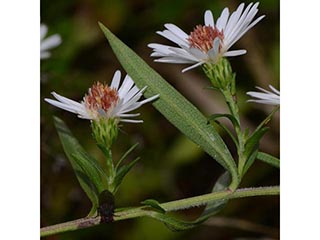
Symphyotrichum lanceolatum ssp. lanceolatum
Symphyotrichum lanceolatum (Willd.) G.L. Nesom ssp. lanceolatum
White Panicle Aster, Panicled Aster
Asteraceae (Aster Family)
Synonym(s):
USDA Symbol: SYLAL6
USDA Native Status: L48 (N), CAN (N)
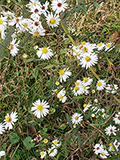
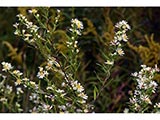
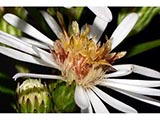
A tall stem bearing a panicle of flower heads with numerous white (occasionally pink, purple or blue-tinged) rays.
This colony-forming species spreads by rhizomes. It has several varieties, differing in color, ray size, and leaf shape and serration.
Plant Characteristics
Duration: PerennialHabit: Herb
Size Notes: Up to about 6 feet tall.
Fruit: Fruit is a cypsela (pl. cypselae). Though technically incorrect, the fruit is often referred to as an achene.
Bloom Information
Bloom Color: White , Pink , Yellow , Blue , PurpleBloom Time: Jul , Aug , Sep , Oct
Distribution
USA: AL , AR , CT , DC , DE , FL , GA , IA , IL , IN , KS , KY , LA , MA , MD , ME , MI , MN , MO , MS , MT , NC , ND , NE , NH , NJ , NY , OH , OK , PA , RI , SC , SD , TN , TX , VA , VT , WI , WVNative Distribution: Throughout much of North America, except far north.
Native Habitat: Damp thickets, meadows, and shorelines.
Value to Beneficial Insects
Special Value to Native BeesThis information was provided by the Pollinator Program at The Xerces Society for Invertebrate Conservation.
Web Reference
Webref 38 - Flora of North America (2019) Missouri Botanical Garden, St. Louis, MO & Harvard University Herbaria, Cambridge, MA.Additional resources
USDA: Find Symphyotrichum lanceolatum ssp. lanceolatum in USDA PlantsFNA: Find Symphyotrichum lanceolatum ssp. lanceolatum in the Flora of North America (if available)
Google: Search Google for Symphyotrichum lanceolatum ssp. lanceolatum
Metadata
Record Modified: 2023-01-20Research By: TWC Staff