Native Plants

Plant Database
Search for native plants by scientific name, common name or family. If you are not sure what you are looking for, try the Combination Search or our Recommended Species lists.
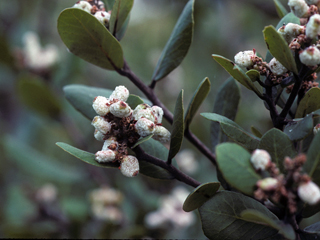
Wasowski, Sally and Andy
Rhus integrifolia
Rhus integrifolia (Nutt.) W.H. Brewer & S. Watson
Lemonade Sumac, Lemonadeberry
Anacardiaceae (Sumac Family)
Synonym(s):
USDA Symbol: RHIN2
USDA Native Status: L48 (N)
A wide-spreading, rounded, evergreen shrub to 8 ft., or more, inland and sometimes only 2 ft. on the ocean. Leaves are shiny, dark-green, leathery and aromatic. Small, pink flowers occur in dense, hairy clusters and are followed by reddish berries. Evergreen, aromatic, rounded, thicket-forming shrub; rarely a small tree with a short, stout trunk and many branches.
From the Image Gallery
Plant Characteristics
Duration: PerennialHabit: Shrub
Leaf Retention: Evergreen
Leaf Arrangement: Alternate
Leaf Complexity: Simple
Leaf Shape: Elliptic
Leaf Margin: Denticulate , Entire
Leaf Texture: Leathery
Fruit Type: Drupe
Size Notes: Tends to grow upright inland, 10-30 feet tall. Sprawls next to beaches where it may be only 2 feet tall.
Leaf: Shiny green above, pale below.
Fruit: 1/2 inch diameter.
Bloom Information
Bloom Color: White , PinkBloom Time: Feb , Mar , Apr , May
Distribution
USA: CANative Distribution: S. CA to adjacent Mex.
Native Habitat: Ocean bluffs, canyons & dry places below 2500 ft.
Growing Conditions
Light Requirement: Sun , Part ShadeSoil Moisture: Dry
Soil Description: Dry soils.
Conditions Comments: This species is often used for erosion control. It is generally disease free and fairly fire proof if given a once/month watering during the summer. Sumac colonies are often single-sexed, formed from a single, suckering parent. Only female plants produce flowers and berries.
Benefit
Use Ornamental: Can be sheared.Use Wildlife: The fruit is consumed by roadrunners and many upland gamebirds, songbirds, large and small mammals.
Use Food: As the common name implies, a sour, refreshing drink can be made from the acid fruit.
Attracts: Birds
Value to Beneficial Insects
Special Value to Native BeesProvides Nesting Materials/Structure for Native Bees
This information was provided by the Pollinator Program at The Xerces Society for Invertebrate Conservation.
Propagation
Description: Treated seed and root cuttings are used for increase.Seed Treatment: Scarification in hot water is necessary. For maximum germination, soak in concentrated H2SO4 4-6 hours.
Commercially Avail: yes
Find Seed or Plants
Find seed sources for this species at the Native Seed Network.
From the National Organizations Directory
According to the species list provided by Affiliate Organizations, this plant is on display at the following locations:Santa Barbara Botanic Garden - Santa Barbara, CA
Native Seed Network - Corvallis, OR
Bibliography
Bibref 995 - Native Landscaping from El Paso to L.A. (2000) Wasowski, S. and A. WasowskiSearch More Titles in Bibliography
Web Reference
Webref 30 - Calflora (2018) CalfloraWebref 37 - Calscape (2019) California Native Plant Society
Additional resources
USDA: Find Rhus integrifolia in USDA PlantsFNA: Find Rhus integrifolia in the Flora of North America (if available)
Google: Search Google for Rhus integrifolia
Metadata
Record Modified: 2022-10-20Research By: TWC Staff