Native Plants

Plant Database
Search for native plants by scientific name, common name or family. If you are not sure what you are looking for, try the Combination Search or our Recommended Species lists.
Watkins, Mariann
Prunus nigra
Prunus nigra Aiton
Canadian Plum, Canada Plum, Red Plum, Black Plum
Rosaceae (Rose Family)
Synonym(s): Prunus americana var. nigra
USDA Symbol: PRNI
USDA Native Status: L48 (N), CAN (N)
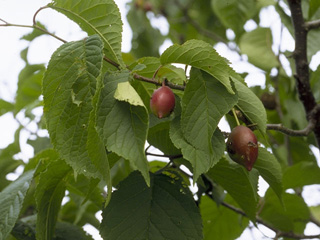
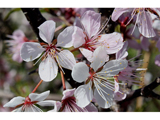
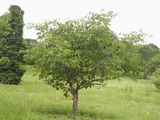
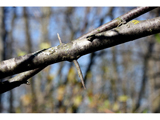
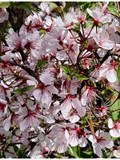
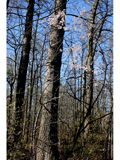
Canadian Plum is a small, 20-30 ft., upright-branched, narrow-headed tree. Its white flowers occur before the leaves in large clusters on long red pedicels. Fruit is yellowish-red to red. Fall foliage ranges from dark red to purple. Bark is dark and smooth.
The northernmost native plum was first recorded along the St. Lawrence River in 1535 by Jacques Cartier (1491-1557), French explorer. Earlier, Native Americans had brought him the dried fruits. The Latin species name, meaning "black," refers to the dark branches. Thickets are formed from root sprouts. These plums are eaten fresh and made into preserves and jellies.
Plant Characteristics
Duration: PerennialHabit: Tree
Leaf Retention: Deciduous
Fruit Type: Drupe
Size Notes: Up to about 30 feet tall.
Fruit: Red, Orange
Bloom Information
Bloom Color: White , PinkBloom Time: Apr , May , Jun
Bloom Notes: White, often fading to pink.
Distribution
USA: CT , IA , IL , IN , MA , ME , MI , MN , NH , NY , OH , VT , WICanada: MB , NB , ON
Native Distribution: Nf. to w. Ont. & MN, s. to VA, KY & IA
Native Habitat: Moist woods; thickets
Growing Conditions
Light Requirement: Part Shade , ShadeSoil Moisture: Moist
Soil pH: Alkaline (pH>7.2)
CaCO3 Tolerance: High
Soil Description: Moist, rich soils.
Conditions Comments: This plant adapts to a variety of soils, is fast-growing and short-lived.
Benefit
Use Wildlife: Birds and other wildlife eat the fruit.Warning: CAUTION: Children have died from eating too many plums without removing the stones. As with other plums, all parts of this tree, except the skin and flesh of the fruits, contain the toxin hydrocyanic acid. (Kershaw)
Conspicuous Flowers: yes
Fragrant Flowers: yes
Value to Beneficial Insects
Special Value to Native BeesThis information was provided by the Pollinator Program at The Xerces Society for Invertebrate Conservation.
Propagation
Description: Prunus species may be rooted from dormant hardwood, softwood, semi-hardwood, or root cuttings. Semi-hardwood and softwood cuttings taken in summer root easiest. Germination of most seeds requires cold stratification. Some species need a period of afterSeed Collection: Collect fruit when it is filled out, firm, and its ripe color. Clean seeds from pulp and briefly air dry. (Seeds to be sown immediately in fall do not need drying.) Storage viability is maintained at 31-41 degrees.
Seed Treatment: For spring sowing, stratify seeds in moist sand for 30-60 days in a greenhouse, then cold stratify (36-41 degrees) for 60-90 days. Plant well before high temperatures.
Commercially Avail: yes
National Wetland Indicator Status
| Region: | AGCP | AK | AW | CB | EMP | GP | HI | MW | NCNE | WMVE |
| Status: | UPL | FACU | FACU | FACU |
Web Reference
Webref 3 - Flora of North America (2014) Missouri Botanical Garden, St. Louis, MO & Harvard University Herbaria, Cambridge, MA.Webref 23 - Southwest Environmental Information Network (2009) SEINet - Arizona Chapter
Additional resources
USDA: Find Prunus nigra in USDA PlantsFNA: Find Prunus nigra in the Flora of North America (if available)
Google: Search Google for Prunus nigra
Metadata
Record Modified: 2023-05-10Research By: TWC Staff