Native Plants

Plant Database
Search for native plants by scientific name, common name or family. If you are not sure what you are looking for, try the Combination Search or our Recommended Species lists.
Anderson, Wynn
Prunus minutiflora
Prunus minutiflora Engelm.
Texas Almond, Texas Wild Almond, Dwarf Plum
Rosaceae (Rose Family)
Synonym(s):
USDA Symbol: PRMI2
USDA Native Status: L48 (N)
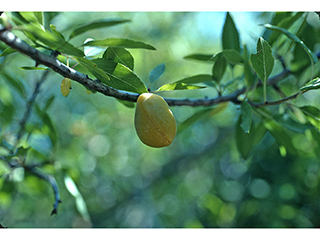
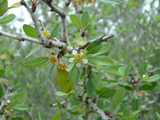
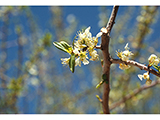
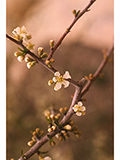
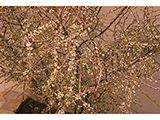
Shrub up to 3 feet tall, often thicket forming, bark gray, new growth on branchlets covered with woolly hairs. Leaves up to 3/4 inch long, firm textured, oblong to elliptic, with margins usually without teeth, a rounded, sometimes pointed, tip, and gradually tapered base. Flowers small, white, on short spurs, appearing in March with the leaves. Fruit spherical, about 1/2 inch long, fleshy but mostly pit, black when ripe. Grows on soils underlain with limestone and on limestone slopes and ledges.

Plant Characteristics
Duration: PerennialHabit: Shrub
Leaf Retention: Deciduous
Fruit Type: Drupe
Size Notes: Up to about 3 feet tall.
Bloom Information
Bloom Color: WhiteBloom Time: Feb , Mar , Apr , May
Distribution
USA: TXNative Habitat: Endemic to the Edwards Plateau where it is only infrequently found. Soils underlain with limestone or on limestone slopes and ledges.
Growing Conditions
Light Requirement: SunSoil Moisture: Dry
Conditions Comments: Could be used as an ornamental or woody ground cover for dry rocky sites. Good wildlife plant. Susceptible to web worm.
Benefit
Use Ornamental: Attractive, Aromatic, Showy, Fall conspicuous, Accent tree or shrubUse Wildlife: Plums attract birds. Nectar-bees, Fruit-birds, Fruit-mammals
Warning: The seeds of all Prunus species, found inside the fruits, contain poisonous substances and should never be eaten. Sensitivity to a toxin varies with a person’s age, weight, physical condition, and individual susceptibility. Children are most vulnerable because of their curiosity and small size. Toxicity can vary in a plant according to season, the plant’s different parts, and its stage of growth; and plants can absorb toxic substances, such as herbicides, pesticides, and pollutants from the water, air, and soil.
Conspicuous Flowers: yes
Deer Resistant: High
Value to Beneficial Insects
Special Value to Native BeesThis information was provided by the Pollinator Program at The Xerces Society for Invertebrate Conservation.
From the National Organizations Directory
According to the species list provided by Affiliate Organizations, this plant is on display at the following locations:Lady Bird Johnson Wildflower Center - Austin, TX
Texas Discovery Gardens - Dallas, TX
NPSOT - Austin Chapter - Austin, TX
Bibliography
Bibref 354 - Native & Naturalized Woody Plants of Austin & the Hill Country (1981) Lynch, D.Bibref 286 - Wildflowers of the Texas Hill Country (1989) Enquist, M.
Search More Titles in Bibliography
Web Reference
Webref 38 - Flora of North America (2019) Missouri Botanical Garden, St. Louis, MO & Harvard University Herbaria, Cambridge, MA.Webref 23 - Southwest Environmental Information Network (2009) SEINet - Arizona Chapter
Webref 1 - Texas Native Shrubs (2002) Texas A&M University Agriculture Program and Leslie Finical, Dallas Arboretum
Additional resources
USDA: Find Prunus minutiflora in USDA PlantsFNA: Find Prunus minutiflora in the Flora of North America (if available)
Google: Search Google for Prunus minutiflora
Metadata
Record Modified: 2023-05-10Research By: NPC