Native Plants

Plant Database
Search for native plants by scientific name, common name or family. If you are not sure what you are looking for, try the Combination Search or our Recommended Species lists.
Anderson, Wynn
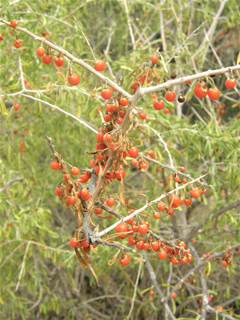
Lycium berlandieri
Lycium berlandieri Dunal
Berlandier's Wolfberry, Wolfberry
Solanaceae (Potato Family)
Synonym(s):
USDA Symbol: LYBE
USDA Native Status: L48 (N)
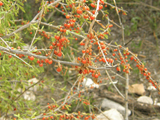
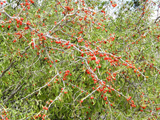
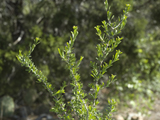
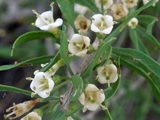
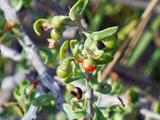
Perennial shrub to 8 feet tall. The small, tubular flowers have 4 or 5 lobes, protruding stamens, and are followed by round, red berries. The 1.25 inch (3.2 cm) long leaves are spatulate and mostly glabrous. This native, rangy, sprawling shrub blooms anytime from spring to fall.
Berlandier wolfberry is found on flats, along washes or arroyos, on dry, gravelly to sandy hills and bajadas, and on rocky slopes. The blue, lavender, or white flowers bloom from February to October. The fruit is a small red berry and is eaten by small birds and mammals, such as chachalacas and raccoons. Wolfberry is browsed by white-tailed deer and occasionally by livestock.
Plant Characteristics
Duration: PerennialHabit: Shrub
Leaf Retention: Evergreen
Leaf Arrangement: Alternate
Breeding System: Flowers Bisexual
Fruit Type: Berry
Size Notes: Up to about 8 feet tall.
Fruit: Red
Bloom Information
Bloom Color: White , Blue , PurpleBloom Time: Feb , Mar , Apr , May , Jun , Jul , Aug , Sep , Oct
Distribution
USA: AZ , NM , OK , TXNative Habitat: Hillsides, Slopes
Growing Conditions
Water Use: LowLight Requirement: Sun , Part Shade
Soil Moisture: Dry
Cold Tolerant: yes
Heat Tolerant: yes
Soil Description: Gravelly, Sandy, Sandy Loam, Medium Loam, Clay Loam, Clay
Benefit
Use Ornamental: Blooms ornamental, Fruits ornamentalUse Wildlife: Nectar-insects, Browse, Fruit-birds, Fruit-mammals
Use Medicinal: Historically, Native Americans have eaten Berlandier wolfberry berries and have used the plant for a wide variety of medicinal purposes
Conspicuous Flowers: yes
Attracts: Birds
Deer Resistant: Moderate
Propagation
Propagation Material: Seeds , Semi-hardwood Cuttings , Softwood CuttingsFrom the National Organizations Directory
According to the species list provided by Affiliate Organizations, this plant is on display at the following locations:Texas Parks and Wildlife Department - Austin, TX
NPSOT - Austin Chapter - Austin, TX
Bibliography
Bibref 355 - Landscaping with Native Plants of Texas and the Southwest (1991) Miller, G. O.Bibref 291 - Texas Wildscapes: Gardening for Wildlife (1999) Damude, N. & K.C. Bender
Search More Titles in Bibliography
Web Reference
Webref 23 - Southwest Environmental Information Network (2009) SEINet - Arizona ChapterAdditional resources
USDA: Find Lycium berlandieri in USDA PlantsFNA: Find Lycium berlandieri in the Flora of North America (if available)
Google: Search Google for Lycium berlandieri
Metadata
Record Modified: 2022-10-19Research By: TWC Staff