Native Plants

Plant Database
Search for native plants by scientific name, common name or family. If you are not sure what you are looking for, try the Combination Search or our Recommended Species lists.
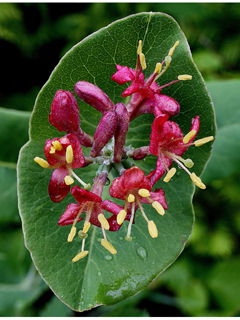
Smith, R.W.
Lonicera dioica
Lonicera dioica L.
Limber Honeysuckle
Caprifoliaceae (Honeysuckle Family)
Synonym(s): Lonicera dioica var. dasygyna, Lonicera dioica var. glaucescens, Lonicera dioica var. orientalis, Lonicera glaucescens, Lonicera glaucescens var. dasygyna
USDA Symbol: LODI2
USDA Native Status: L48 (N), CAN (N)
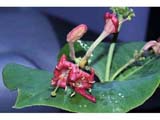
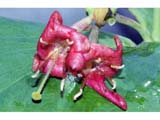
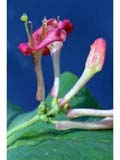
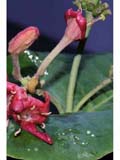
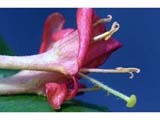
Limber Honeysuckle is a low, climbing, vine-like shrub with branches arching or twining 3-10 ft. from the plant. Distinctive, red, tubular flowers with yellow stamens are arranged in whorls at the end of branches. Red berries follow. Deciduous leaves are opposite, the uppermost pair being connate. Fall foliage is yellow.
The genus, Lonicera, is named for Adam Lonicer (1528 - 1586), a German botanist noted for his 1557 revised version of Eucharius Rösslin’s herbal. He became professor of Mathematics in 1553 and Doctor of Medicine in 1554, becoming the town physician in Frankfurt-am-Main. His true interest though was herbs and the study of botany.
Plant Characteristics
Duration: PerennialHabit: Shrub
Leaf Retention: Deciduous
Fruit Type: Berry
Size Notes: Vine-like stems up to about 10 feet long.
Fruit: Red, Orange
Bloom Information
Bloom Color: Red , Orange , Yellow , PurpleBloom Time: May , Jun
Distribution
USA: AR , CT , GA , IA , IL , IN , KS , KY , MA , MD , ME , MI , MN , MO , NC , ND , NE , NH , NJ , NY , OH , OK , PA , RI , SD , TN , VA , VT , WI , WV , WYCanada: AB , ON
Native Distribution: Que. to n.e. B.C., s. to NC, TN & OK
Native Habitat: Dry to wet, open woods, woodland edges & thickets
Growing Conditions
Light Requirement: Sun , Part Shade , ShadeSoil Moisture: Dry , Moist
Soil pH: Circumneutral (pH 6.8-7.2)
Soil Description: Various moist to dry soils.
Conditions Comments: This species passes into var. glaucescens (larger leaves & smaller flowers) especially in the western part of its range.
Benefit
Use Wildlife: Flowers attract hummingbirds.Conspicuous Flowers: yes
Attracts: Hummingbirds
Value to Beneficial Insects
Special Value to Bumble BeesThis information was provided by the Pollinator Program at The Xerces Society for Invertebrate Conservation.
Propagation
Description: Species of Lonicera come easily from cuttings: hardwood cuttings outdoors or young summer shoots placed over bottom heat. Seeds germinate well if treated.Seed Collection: Fruits of this genus are usually hand-picked and seeds are extracted by maceration.
Seed Treatment: Cold-moist stratification is necessary.
Commercially Avail: yes
National Wetland Indicator Status
| Region: | AGCP | AK | AW | CB | EMP | GP | HI | MW | NCNE | WMVE |
| Status: | FACU | FACU | FACU | FACU | FACU | FACU |
Bibliography
Bibref 841 - Native Alternatives to Invasive Plants (2006) Burrell, C. C.Bibref 1294 - The Midwestern Native Garden: Native Alternatives to Nonnative Flowers and Plants An Illustrated Guide (2011) Adelman, Charlotte and Schwartz, Bernard L.
Search More Titles in Bibliography
Web Reference
Webref 23 - Southwest Environmental Information Network (2009) SEINet - Arizona ChapterAdditional resources
USDA: Find Lonicera dioica in USDA PlantsFNA: Find Lonicera dioica in the Flora of North America (if available)
Google: Search Google for Lonicera dioica
Metadata
Record Modified: 2023-02-16Research By: TWC Staff