Native Plants

Plant Database
Search for native plants by scientific name, common name or family. If you are not sure what you are looking for, try the Combination Search or our Recommended Species lists.
Smith, R.W.
Hesperostipa spartea
Hesperostipa spartea (Trin.) Barkworth
Porcupinegrass, Porcupine Grass
Poaceae (Grass Family)
Synonym(s): Stipa spartea
USDA Symbol: HESP11
USDA Native Status: L48 (N), CAN (N)
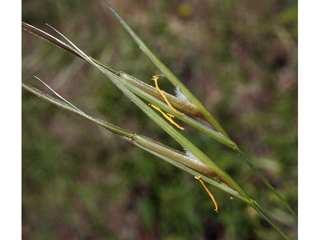
Upright to arching clumps of stout stems rise 2-3+ ft. The seeds, occuring in long, slender, nodding seedheads, have a pointed, twisted awn, 4-8" long. The entire plant cures silvery white in fall.

Plant Characteristics
Duration: PerennialHabit: Grass/Grass-like
Root Type: Fibrous
Leaf Arrangement: Alternate
Leaf Complexity: Simple
Leaf Venation: Parallel
Fruit Type: Caryopsis
Size Notes: Up to about 3-1/2 feet tall.
Leaf: Green
Bloom Information
Bloom Color: YellowBloom Time: Apr , May
Distribution
USA: CO , IA , IL , IN , KS , MI , MN , MO , MT , ND , NE , NM , OH , OK , PA , SD , WI , WYNative Distribution: Ont. to B.C., s. to OH, MO, NM & MT
Native Habitat: Dry prairies & open woodlands
Growing Conditions
Water Use: MediumLight Requirement: Sun
Soil Moisture: Dry
CaCO3 Tolerance: Medium
Soil Description: Dry, rocky or sandy soils.
Value to Beneficial Insects
Provides Nesting Materials/Structure for Native BeesThis information was provided by the Pollinator Program at The Xerces Society for Invertebrate Conservation.
Propagation
Description: Unlike seeds of most other grasses, porcupine grass seeds germinate best when planted deep (3/4"). Seeds have a way of sowing themselves naturally by means of a twisted awn that screws the seed into the ground. Sow seeds in spring. They prefer cool weaSeed Collection: Collect in late Jun. to Jul.
Seed Treatment: Moist stratification may increase germination.
Commercially Avail: yes
Bibliography
Bibref 946 - Gardening with Prairie Plants: How to Create Beautiful Native Landscapes (2002) Wasowski, SallySearch More Titles in Bibliography
Web Reference
Webref 38 - Flora of North America (2019) Missouri Botanical Garden, St. Louis, MO & Harvard University Herbaria, Cambridge, MA.Additional resources
USDA: Find Hesperostipa spartea in USDA PlantsFNA: Find Hesperostipa spartea in the Flora of North America (if available)
Google: Search Google for Hesperostipa spartea
Metadata
Record Modified: 2023-01-25Research By: TWC Staff