Native Plants

Plant Database
Search for native plants by scientific name, common name or family. If you are not sure what you are looking for, try the Combination Search or our Recommended Species lists.
Glase, Terry
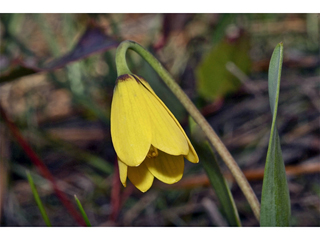
Fritillaria pudica
Fritillaria pudica (Pursh) Spreng.
Yellow Fritillary, Yellow Missionbells, Golden Bells
Liliaceae (Lily Family)
Synonym(s): Lilium pudicum, Ochrocodon pudicus
USDA Symbol: FRPU2
USDA Native Status: L48 (N), CAN (N)
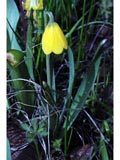
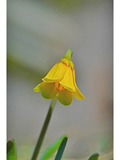
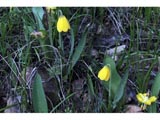
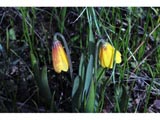
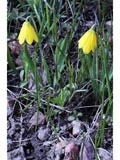
The stem of Yellow Missionbells or Yellow Fritillary grows 1 ft. high and is a dainty bearer of a clear yellow, hanging, bell-like flower. This dainty little plant has 1 yellow, narrowly bell-shaped flower hanging at the top of the flower stalk. There may be a pair or a whorl of linear leaves subtending the solitary (sometime 2-3 in a group) flower. The flower fades to red or purple.
A charming, modest Lily that can be mistaken for no other; the narrow yellow bell becomes rusty red or purplish as the flower ages.
Plant Characteristics
Duration: PerennialHabit: Herb
Leaf Complexity: Simple
Fruit Type: Capsule
Size Notes: Up to about 1 foot tall.
Leaf: Green
Bloom Information
Bloom Color: YellowBloom Time: Mar , Apr , May , Jun
Distribution
USA: CA , CO , ID , MT , ND , NM , NV , OR , UT , WA , WYCanada: AB , BC
Native Distribution: S. B.C. to n. CA (e. of the Cascades), e. to s.w. Alt., WY & UT; also historically near Mandan, ND
Native Habitat: Grasslands; sagebrush desert; ponderosa or mixed conifer forests
Growing Conditions
Water Use: MediumLight Requirement: Part Shade
Soil Moisture: Dry
CaCO3 Tolerance: Medium
Soil Description: Dry, rocky soils.
Conditions Comments: Golden bells can not be grown successfully out of its range. In the garden, fritillaries are often finicky, the bulbs are eaten by gophers, and the foliage is devoured by snails and slugs. In addition, plants often take a year or two "off" from flowering, making only a single, broad, tongue-shaped basal leaf during those times. To assure good flowering, one needs a colony of several bulbs.
Benefit
Use Wildlife: Bear and rodents eat the bulbs. Deer and other grazers eat the leaves and seed pods.Conspicuous Flowers: yes
Find Seed or Plants
Find seed sources for this species at the Native Seed Network.
From the National Organizations Directory
According to the species list provided by Affiliate Organizations, this plant is on display at the following locations:Native Seed Network - Corvallis, OR
Web Reference
Webref 38 - Flora of North America (2019) Missouri Botanical Garden, St. Louis, MO & Harvard University Herbaria, Cambridge, MA.Webref 23 - Southwest Environmental Information Network (2009) SEINet - Arizona Chapter
Additional resources
USDA: Find Fritillaria pudica in USDA PlantsFNA: Find Fritillaria pudica in the Flora of North America (if available)
Google: Search Google for Fritillaria pudica
Metadata
Record Modified: 2023-02-10Research By: TWC Staff