Native Plants

Plant Database
Search for native plants by scientific name, common name or family. If you are not sure what you are looking for, try the Combination Search or our Recommended Species lists.
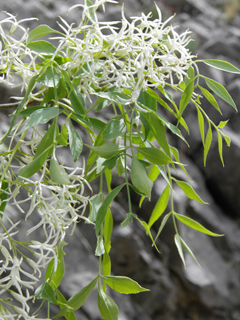
Anderson, Wynn
Fraxinus cuspidata
Fraxinus cuspidata Torr.
Fragrant Ash, Flowering Ash
Oleaceae (Olive Family)
Synonym(s): Fraxinus cuspidata var. macropetala
USDA Symbol: FRCU
USDA Native Status: L48 (N)
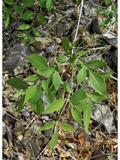
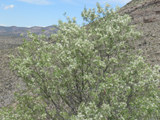
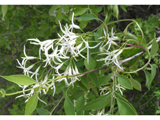
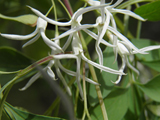
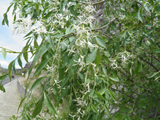
Fragrant ash or flowering ash is a small tree or large shrub growing to a maximum height of 20 ft. Branches are slender and the bark is smooth gray, becoming scaly with age. Pinnate leaves, which become shiny dark-green, appear at the same time as the fragrant flowers. These unfurl in clusters 3-4 in. long. Each of the four, white petals is divided into long narrow lobes.
Plant Characteristics
Duration: PerennialHabit: Tree
Leaf Retention: Deciduous
Breeding System: Flowers Unisexual , Monoecious
Fruit Type: Samara
Size Notes: Up to about 20 feet tall.
Flower: Flowers in 3 inch panicles
Bloom Information
Bloom Color: WhiteBloom Time: Mar , Apr , May , Jun
Distribution
USA: AZ , NM , NV , TXNative Distribution: W. TX to AZ & adjacent Mex.
Native Habitat: Hillsides, Slopes, Canyons
Growing Conditions
Water Use: LowLight Requirement: Part Shade
Soil Moisture: Dry
Soil pH: Circumneutral (pH 6.8-7.2)
Cold Tolerant: yes
Soil Description: Limestone or black clay soils. Limestone-based, Caliche type, Sandy, Sandy Loam, Medium Loam, Clay Loam, Clay.
Benefit
Use Ornamental: Aromatic, Understory tree, Attractive, Blooms ornamentalUse Wildlife: Cover, Nesting site, Browse, Seeds-granivorous birds.
Conspicuous Flowers: yes
Attracts: Butterflies
Larval Host: Swallowtail butterflies.
Propagation
Propagation Material: SeedsDescription: Seeds may be sown outdoors after collection or stored and stratified then sown in spring.
Seed Treatment: Stratify in moist sand or perlite for 30-60 days at 41 degrees.
Commercially Avail: yes
From the National Organizations Directory
According to the species list provided by Affiliate Organizations, this plant is on display at the following locations:Texas Discovery Gardens - Dallas, TX
Texas Parks and Wildlife Department - Austin, TX
Wildflower Center Seed Bank
LBJWC-1626 Collected 2014-10-01 in Brewster County by Lady Bird Johnson Wildflower CenterBibliography
Bibref 298 - Field Guide to Texas Trees (1999) Simpson, B.J.Bibref 995 - Native Landscaping from El Paso to L.A. (2000) Wasowski, S. and A. Wasowski
Bibref 318 - Native Texas Plants: Landscaping Region by Region (2002) Wasowski, S. & A. Wasowski
Bibref 291 - Texas Wildscapes: Gardening for Wildlife (1999) Damude, N. & K.C. Bender
Bibref 297 - Trees of Central Texas (1984) Vines, Robert A.
Search More Titles in Bibliography
Web Reference
Webref 1 - Texas Native Shrubs (2002) Texas A&M University Agriculture Program and Leslie Finical, Dallas ArboretumAdditional resources
USDA: Find Fraxinus cuspidata in USDA PlantsFNA: Find Fraxinus cuspidata in the Flora of North America (if available)
Google: Search Google for Fraxinus cuspidata
Metadata
Record Modified: 2022-10-05Research By: TWC Staff