Native Plants

Plant Database
Search for native plants by scientific name, common name or family. If you are not sure what you are looking for, try the Combination Search or our Recommended Species lists.
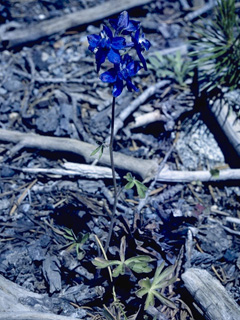
Bransford, W.D. and Dolphia
Delphinium glareosum
Delphinium glareosum Greene
Olympic Larkspur, Delphinium
Ranunculaceae (Buttercup Family)
Synonym(s): Delphinium caprorum, Delphinium glareosum ssp. caprorum, Delphinium glareosum var. caprorum
USDA Symbol: DEGL
USDA Native Status: L48 (N), CAN (N)
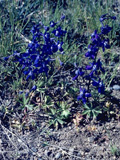
A sturdy perennial with one to several stout, thick, 8-16 in. stems. Numerous fleshy, round, much-divided leaves are distributed evenly along the stems with the basal and lower leaves forming a rounded clump. The loosely-flowered spike is well over half the total height of the plant and made up of deep bluish-purple, spurred flowers.
Plant Characteristics
Duration: PerennialHabit: Herb
Fruit Type: Follicle
Size Notes: Up to about 16 inches tall.
Bloom Information
Bloom Color: Blue , PurpleBloom Time: Jun , Jul , Aug
Distribution
USA: OR , WACanada: BC
Native Distribution: C. Cascades of OR & from Chelan Co. to Yakima Co., WA; also in the Olympic Mts.
Native Habitat: Alpine & subalpine talus slopes & rocky ridges
Growing Conditions
Light Requirement: Sun , Part Shade , ShadeSoil Moisture: Dry
Soil Description: Rocky soils.
Benefit
Warning: Plants of the genus Delphinium contain toxins, and no parts of them should ever be eaten. They can be fatally poisonous to both humans and animals. Sensitivity to a toxin varies with a person’s age, weight, physical condition, and individual susceptibility. Children are most vulnerable because of their curiosity and small size. Toxicity can vary in a plant according to season, the plant’s different parts, and its stage of growth; and plants can absorb toxic substances, such as herbicides, pesticides, and pollutants from the water, air, and soil.Conspicuous Flowers: yes
Propagation
Description: Sow fresh seeds in fall for outdoor stratification.Commercially Avail: yes
Web Reference
Webref 38 - Flora of North America (2019) Missouri Botanical Garden, St. Louis, MO & Harvard University Herbaria, Cambridge, MA.Webref 23 - Southwest Environmental Information Network (2009) SEINet - Arizona Chapter
Additional resources
USDA: Find Delphinium glareosum in USDA PlantsFNA: Find Delphinium glareosum in the Flora of North America (if available)
Google: Search Google for Delphinium glareosum
Metadata
Record Modified: 2023-02-06Research By: TWC Staff