Native Plants

Plant Database
Search for native plants by scientific name, common name or family. If you are not sure what you are looking for, try the Combination Search or our Recommended Species lists.
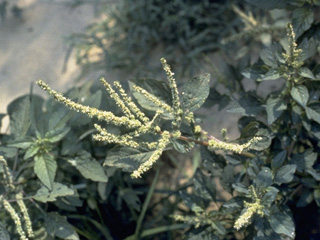
Martin, Edwin M.
Amaranthus spinosus
Amaranthus spinosus L.
Spiny Amaranth, Thorny Pigweed
Amaranthaceae (Amaranth Family)
Synonym(s):
USDA Symbol: AMSP
USDA Native Status: L48 (N), HI (I), PR (N), VI (N), CAN (I)
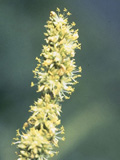
Tiny, yellow-green flowers on a stout, much-branched, sometimes reddish stem. Amaranthus species, though regarded as common weeds, produce tremendous numbers of seed-like fruit, which are an important food for many songbirds.
The Amaranthaceae are a family of annual or perennial herbs with small, crowded flowers. There are usually 5 sepals and no petals. Filaments of the stamens are often united into a short tube.
Plant Characteristics
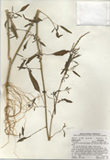
Duration: AnnualHabit: Herb
Size Notes: Up to about 6 feet tall.
Fruit: Utricle.
Bloom Information
Bloom Color: Yellow , GreenBloom Time: Jul , Aug , Sep , Oct
Distribution
USA: AL , AR , CA , CT , DC , DE , FL , GA , HI , IA , IL , IN , KS , KY , LA , MA , MD , ME , MN , MO , MS , NC , NE , NJ , NY , OH , OK , PA , RI , SC , TN , TX , VA , VT , WI , WVNative Distribution: Manitoba and Ontario; Maine south to Florida, west to Texas, and north to Minnesota.
Native Habitat: Waste places, disturbed ground, and cultivated soil.
National Wetland Indicator Status
| Region: | AGCP | AK | AW | CB | EMP | GP | HI | MW | NCNE | WMVE |
| Status: | FACU | FACU | FACU | FACU | FACU | FACU | FACU | FACU |
Web Reference
Webref 3 - Flora of North America (2014) Missouri Botanical Garden, St. Louis, MO & Harvard University Herbaria, Cambridge, MA.Additional resources
USDA: Find Amaranthus spinosus in USDA PlantsFNA: Find Amaranthus spinosus in the Flora of North America (if available)
Google: Search Google for Amaranthus spinosus
Metadata
Record Modified: 2022-09-27Research By: TWC Staff