Native Plants

Q. Who is Mr. Smarty Plants?
A: There are those who suspect Wildflower Center volunteers are the culpable and capable culprits. Yet, others think staff members play some, albeit small, role. You can torture us with your plant questions, but we will never reveal the Green Guru's secret identity.

Did you know you can access the Native Plant Information Network with your web-enabled smartphone?

Ask Mr. Smarty Plants
Ask Mr. Smarty Plants is a free service provided by the staff and volunteers at the Lady Bird Johnson Wildflower Center.

rate this answer

Saturday - December 22, 2012
From: Wilmington, NC
Region: Southeast
Topic: Butterfly Gardens, Wildlife Gardens, Planting, Edible Plants
Title: Landscaping from Wilmington NC
Answered by: Barbara Medford
QUESTION:
I plan on moving to Belmont NC in the next couple of years and settling down with my future wife in her home town. I am a huge do it yourself person. I love to make things from scratch, including building furniture, cooking dinner, or even making alcohol. I want to have a garden that not only feeds us but also have a large section to feed the wildlife. I want to have several nut trees, fruit trees if possible, and also berry plants. I want to have a garden along the lines of cucumber, tomatoes, and different types of herbs. My question to you is what is the best way to arrange my garden so that the wildlife will benefit in one section, along with myself have personal in another(without putting up fences)? I do not want to limit the wildlife to the food sources, but I also would like to have some personal benefit from it too.ANSWER:
This is called "Horticulture 101," usually two semesters in the Freshman year in college, and the teaching for which this member of the Mr. Smarty Plants Team is not qualified. However, we can introduce you to our Native Plant Database, find some wonderful "How-To" articles by people who DO know what they are talking about, and give you some suggestions for planning in advance before you buy a single plant or turn a shovelful of dirt.
The first thing we need to explain to you is that the Lady Bird Johnson Wildflower Center, home of Mr. Smarty Plants, is dedicated to the growth, propagation and protection of plants native not only to North America but also to the area in which they are being grown; in your case, the Southeast or North Carolina. We will also note that most vegetables are either non-native or so hybridized that it is impossibl to identify them. What you call "herbs" probably refer to the Meditteranean plants such as basil, rosemary and thyme, all often used in cooking, but none of which are native to North America.
Now, on to your textbook in this course. We have 2 series of articles, one "how-to" articles and one "step-by step". Here is a suggested reading list:
A Guide to Native Plant Gardening
Butterfly Gardening
Caring for your New Native Plant
Under Cover with Mulch
How to Plant a Tree
How to Prune a Tree
Since you apparently have a while to plot and plan, we are going to suggest a routine that will help when you actually start doing it yourself. You didn't indicate if you were moving into your bride-to-be's existing house or buying or building a new one. If you are moving into an existing house, here are our suggestions:
1. Map out the area, including dimensions of whole lot, existing structures and/or large trees, fences, etc.
2. Watch the property for several days, estimating the amount of sun in various spots. This will have a large part in the selection of plants. If you have a chance, do this at different times of the year, as the amount of sun will change with the seasons. We conside "full sun" to be 6 hours or more of sun a day; "part shade" 2 to 6 hours of sun and "shade" 2 hours or less of sun a day. Those terms will be used in the webpages on each plant, so you will know where is the best place to put particular plants. Most blooming plants bloom best with at least several hours of full sun.
3. Find out what kind of soil you have. For example, the soil in Central Texas, where we are, is pretty alkaline and has lots of limestone in the soil. East Texas, on the other hand, has a lot of acidic soil due to centuries of oak and pine trees dropping leaves and needles creating the acidity. We suggest you contact the North Carolina State University Extension Office for New Hanover County. They can probably arrange for you to have a soil test made, or at least tell you if you have acidic, alkaline or circumneutral soils.
Since we cannot see nor even visualize your property, you will have to be the one to make the decisions about where to put wildlife gardens, private areas, etc. Most "fruit" trees are not native to North America, but we will list what we can find that is native, along with some native nut trees. We have also listed some berries; we suggest that when you contact the Extension Office, you ask them for edible plant lists for plants that grow in your area. They are not quite as determined as we are to use North American natives. You will find that with some trees, it can take up to 25 years to begin producing nuts. Follow each plant link to our webpage to see what the growing conditions, estimated mature sizes and so forth are for each tree or bush. The list is just to help familiarize yourself with the database so you can find your own plant selections
Edible Fruits, Nuts and Berries Native to North Carolina:
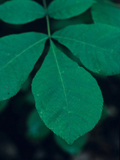
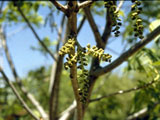
Carya alba (Mockernut hickory)
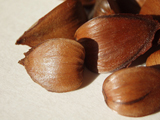
Fagus grandifolia (American beech)
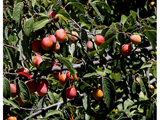
Prunus americana (American plum)
Diospyros virginiana (Common persimmon)
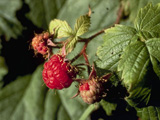
Rubus idaeus ssp. strigosus (Grayleaf red raspberry)
Vaccinium corymbosum (Highbush blueberry)
Doing the same sort of search for trees or grasses or shrubs, whatever you need will yield you your own personalized lists.
Hopefully, that is enough to get you started. You will learn as you go, find books to read on gardening in your area, maybe attend some classes in horticulture or landscape architecture at the local university.
From the Image Gallery
More Planting Questions
When to transplant volunteer Cedar Elms in Cedar Park, TX?
October 11, 2012 - We have a number of volunteer cedar elms we would like to transplant. When is the best time to do this? Should they be potted first and later transplanted or transplanted immediately? Thanks.
view the full question and answer
Newly planted magnolia in Hedron NE
September 19, 2010 - We planted a Magnolia stellata 'Royal Star' in our landscape about 2 weeks ago. It is approx 7' tall. My question is should the leaves on it all be turning brown and crisp already or are doing some...
view the full question and answer
Digging wild buttercup from roadside in Mechanicsville MD
May 28, 2012 - Mr. Smarty Plants, is it illegal to dig out wild buttercup in Maryland? I see them along the dirt road or just in the ditch. Since buttercup considered weed, I'm wondering what the law say about this...
view the full question and answer
Transplanting trilliums
April 28, 2010 - What's the best time to transplant white trillium on my property on the shore of Lake Michigan?
view the full question and answer
Moving plants for extreme drought from Greencastle IN
August 23, 2012 - In exceptional drought here in Indiana, I am looking at weeds that may become my next perennials! How do I move what my dad called ragged robins from the edges of roads. They are blue and could be wil...
view the full question and answer
| Support the Wildflower Center by Donating Online or Becoming a Member today. |