Native Plants

Q. Who is Mr. Smarty Plants?
A: There are those who suspect Wildflower Center volunteers are the culpable and capable culprits. Yet, others think staff members play some, albeit small, role. You can torture us with your plant questions, but we will never reveal the Green Guru's secret identity.

Did you know you can access the Native Plant Information Network with your web-enabled smartphone?

Ask Mr. Smarty Plants
Ask Mr. Smarty Plants is a free service provided by the staff and volunteers at the Lady Bird Johnson Wildflower Center.

rate this answer

Friday - October 19, 2012
From: Austin, TX
Region: Southwest
Topic: General Botany, Herbs/Forbs
Title: Information about Turk's Cap for school project
Answered by: Nan Hampton
QUESTION:
Hello, my name is Veronica. I am doing a Species Study on Turk's Cap at Clint Small Middle School in the Green Tech Academy. I would like to learn more on my Native Texas Species. I am contacting you because I would like to be an expert on the plant that I chose. I would like to learn more about my species. I was hoping you could email me back to give me some cool facts about my plant. Thanks!ANSWER:
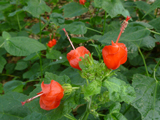
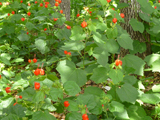
It is easy for you to do your very own research on our webpage for your project. First, visit our Native Plant Database and enter "Turk's cap" into the Name slot under Search native plant database: This will lead you to the species page for Malvaviscus arboreus var. drummondii (Turk's cap or turkscap) that has a lot of information about Turk's cap such as the plant's characteristics, its distribution and growing conditions and much more. If you scroll down the bottom of the page, you will find a heading called ADDITIONAL RESOURCES. If you click on the link for the USDA, you will go to the page for Turk's cap in the USDA Plants Database to see what information they have. If you click on the link for FNA (Flora of North America), you will find that Turk's cap isn't yet included in the FNA online. If you click on the Google link, you will find many articles about Turk's cap from other webpages such as the Archive of Central Texas Plants from the School of Biological Sciences at the University of Texas. Good luck with your report!
From the Image Gallery
More Herbs/Forbs Questions
Butterfly Plants for Chicago
September 13, 2014 - I live near Chicago, IL and am interested in planting a butterfly garden. Not sure when to start, but I want all native plants that would attract butterflies. Can you please let me know which plants ...
view the full question and answer
Care for Monardella undulata var. frutescens from Pleasanton CA
March 05, 2011 - Inquiry about care of the plant Monardella undulata var frutescens "Jokerst." Full Sun? Soil? etc
Thanks, Smarty!
view the full question and answer
Shade tolerant plants for erosion from Austin
May 03, 2014 - I live in Austin and my house backs up to Shoal Creek. I am looking for a native creeping vine or something that will grow on the shaded bank to help prevent erosion. It should be able to tolerate the...
view the full question and answer
Plants for near a salt water swimming pool
April 01, 2009 - I need some suggestions of plants that will grow next to a public salt water swimming pool, located in Bossier City, Louisiana
view the full question and answer
Native plants for a garden in Greenville SC
July 12, 2009 - Beebalm, Threadleaf Coreopsis, a Yaupon Holly, a Southern Magnolia, and a Highbush Blueberry. And as a ground cover in some areas, we have Cinquefoil (which helped me choke out Indian strawberry!) But...
view the full question and answer
| Support the Wildflower Center by Donating Online or Becoming a Member today. |