Native Plants

Q. Who is Mr. Smarty Plants?
A: There are those who suspect Wildflower Center volunteers are the culpable and capable culprits. Yet, others think staff members play some, albeit small, role. You can torture us with your plant questions, but we will never reveal the Green Guru's secret identity.

Did you know you can access the Native Plant Information Network with your web-enabled smartphone?

Ask Mr. Smarty Plants
Ask Mr. Smarty Plants is a free service provided by the staff and volunteers at the Lady Bird Johnson Wildflower Center.

rate this answer

Monday - August 13, 2012
From: Memphis, TN
Region: Southeast
Topic: Drought Tolerant, Trees
Title: Tree to replace Betula nigra (River birch) in Memphis
Answered by: Nan Hampton
QUESTION:
HI Mr. Smarty Pants, I think I need to replace the river birch tree in my west-facing front yard in Memphis, TN. I have sun all day, but it gets really hot in the afternoon. The soil in my yard is generally dry and I think mine may be alkaline as the tree leaves are yellow-tinged and shed all year. It also loses small branches whenever there is moderate wind. Due to our summer droughts, I am afraid the roots have begun to invade the plumbing pipes that run under the front yard from the street. Can you recommend a better type tree to replace it with based on the soil type, hot temperatures and summer droughts? There are no overhead power lines to worry about and I also want one that is non-toxic to pets. Thanks, AnneANSWER:
Betula nigra (River birch) doesn't sound like the best tree for your dry, sunny yard. From the information on the species page, I suspect it is the dry conditions that have caused the leaves to turn yellow and fall off. You should contact your University of Tennessee Extension – Shelby County to learn how to get your soil pH tested to help you determine what tree will grow best there. You can choose a tree yourself by going to our Tennessee Recommended page and using the NARROW YOUR SEARCH option to choose "Tree" from General Appearance, "Sun" from Light Requirement and "Dry - no signs of moisture" from Soil Moisture. From this list, here are suggestions that are all native to Shelby County:
Quercus muehlenbergii (Chinkapin oak) requires alkaline soil (pH greater than 7.2)
Quercus rubra (Northern red oak) requires acidic soil (pH less than 6.8)
Quercus alba (White oak) will grow in acidic soil (pH less than 6.8) and in circumneutral soil (pH 6.9 to 7.2)
Carya glabra (Pignut hickory) grows in circumneutral soil (pH 6.9 to 7.2)
The acorns of the oaks can cause gastro-intestinal distress if eaten. Poisonous Plants of North Carolina site says: "CAUSES ONLY LOW TOXICITY IF EATEN." The University of Pennsylvania Poisonous Plants says that Quercus species can cause oak poisoning in cattle, sheep and horses. Quercus species are listed as toxic for cattle on the Canadian Poisoous Plants Information System and Cornell University: Plants Poisonous to Livestock. None of the oak species are listed on the ASPCA list for dogs. Carya glabra is not listed as toxic on any of the toxic plants databases listed below. It is, in fact, listed as "non-toxic" on the ASPCA list for dogs.
Here are toxic plant databases you can search:
ASPCA: Toxic and Non-Toxic Plant List – Dogs
Poisonous Plants of North Carolina
University of Pennsylvania Poisonous Plants
Canadian Poisonous Plants Information System
From the Image Gallery
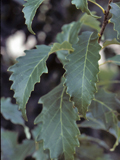
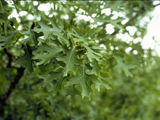
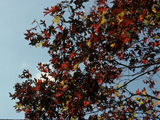

More Trees Questions
Evergreen tree for Phoenix
November 17, 2013 - I need your help. I'm looking for a pretty evergreen tree for my small front yard in Phoenix. One that is not horribly messy and doesn't get wider that 10 - 15 ft. I want to be able to decorate at...
view the full question and answer
Cupressaceae dying in Suffolk Co.NY
October 20, 2012 - I have noticed that all of my Cupressaceae (& others I see in my area) are dying. They turn yellow, then rust & brown til they are everbrowns. what is going on?
view the full question and answer
Tree for caliche soil in Cochise County, Arizona
August 15, 2012 - What trees will thrive in areas of moderate caliche soil in southeast Arizona? My property is at 4,200 feet of elevation. Thanks for your help
view the full question and answer
Mystery tree with yellow fruit in MN
November 12, 2012 - There is a tree at my workplace, about 8' tall, with small, pea-sized yellow berries right now (Oct. 2012). The berries are attractive to Cedar Waxwings, and the tree has small leaves that are simple...
view the full question and answer
Grafting Pecan Trees
July 05, 2013 - I have planted two pecan nuts and now they are about 4 feet tall trees, they have not been grafted but can I graft one of the trees to the other and vice versa and expect pecans from then, they are he...
view the full question and answer
| Support the Wildflower Center by Donating Online or Becoming a Member today. |