Native Plants

Q. Who is Mr. Smarty Plants?
A: There are those who suspect Wildflower Center volunteers are the culpable and capable culprits. Yet, others think staff members play some, albeit small, role. You can torture us with your plant questions, but we will never reveal the Green Guru's secret identity.
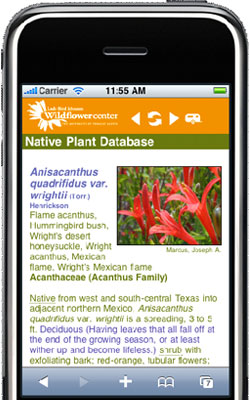
Did you know you can access the Native Plant Information Network with your web-enabled smartphone?

Ask Mr. Smarty Plants
Ask Mr. Smarty Plants is a free service provided by the staff and volunteers at the Lady Bird Johnson Wildflower Center.

rate this answer

Friday - June 08, 2012
From: Angier, NC
Region: Southeast
Topic: Soils, Problem Plants
Title: Zinc tolerant plants for sunny area
Answered by: Nan Hampton
QUESTION:
I have a very high zinc soil in an all day sun area. Any suggestions as to what kind of flower can I grow successfully? Zone 8 Thank youANSWER:
Zinc is one of the micronutrients needed for successful plant growth. However, concentrated levels of zinc can be detrimental to plant growth and, depending on the concentration of zinc, even result in the death of some plants. Zinc is a natural occurrence in air, soil and water, but concentrated levels can occur from human activities such as waste products of industry and mining. The information I can find about zinc tolerance in plants is related to phytoremediation of sites contaminated by heavy metals—including zinc. Plants successful in phytoremediation are able to accumulate the heavy metals in their tissues, thus removing them from the soil. The plants are then harvested and disposed of. In the course of these studies it has been determined that some plants are "accumulators" and take up high concentrations of heavy metals without a toxic effect. Other plants that grow in high concentrations of heavy metals turn out to be "excluders" and don't end up with high concentrations of heavy metals. They have the ability to exclude the heavy metals from uptake and continue growing on the site. For your purposes, however, you don't care which they do as long as they will grow on soils with high concentrations of zinc. As far as I can determine no one has produced a list or a study of beautiful flowering plants (native or non-native cultivars) that grow well on high zinc concentrations. Many of the studies have been carried out in Europe and Asia using plants native to those regions. Most of the North American native plants that have successfully grown on high zinc concentrations are not those that are considered particularly beautiful, but I do have some recommendations for you for plants that are native to North Carolina:
GRASSES
Festuca rubra (Red fescue). Here are photos.
Deschampsia cespitosa (Tufted hairgrass)
Sporobolus indicus (Smut grass)
HERBACEOUS PLANTS
Ambrosia artemisiifolia (Annual ragweed). Here are more photos and information.
Flaveria trinerva (threadleaf glowwort). Here are photos and more information.
Xanthium strumarium (Rough cockleburr). Here are more photos and information.
Solanum elaeagnifolium (Silverleaf nightshade)
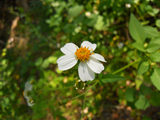
Bidens alba (Common beggarticks). Here are more photos and information.
Desmodium paniculatum (Panicled tick trefoil). Here are more photos and information.
Phyla nodiflora (Texas frogfruit)
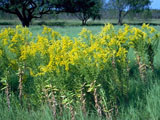
Solidago altissima (Tall goldenrod)
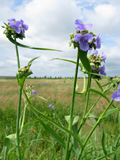
Tradescantia ohiensis (Bluejacket)
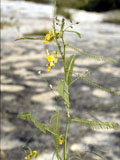
Sesbania herbacea (Bigpod sesbania)
The above plants were found in the following academic papers that could be available at a university near you:
Franco-Hernandez, M. O. et al. 2010. Heavy metals concentration in plants growing on mine tailings in Central Mexico. Bioresource Technology 101(11):3864-3869.
R. Carrillo González and M.C.A. González-Chávez. 2006. Metal accumulation in wild plants surrounding mining wastes. Environmental Pollution 144(1):84-92. (A study carried out in the state of Zacatecas in Mexico).
Joonki Yoon et al. 2006. Accumulation of Pb, Cu, and Zn in native plants growing on a contaminated Florida site. Science of the Total Environment 368(2-3):456-464.
You can also read the answer to a previous question about phytoremediation of lead in soil and the answer to a general question about phytoremediation.
Additionally, you might like to contact the Harnett County Office of the North Carolina State University Cooperative Extension Service. You are likely not the only person in the area having problems growing plants on soils with high concentrations of zinc and they might have other recommendations for you.
From the Image Gallery

More Problem Plants Questions
Repairing the split trunk of a TX mountain laurel
February 28, 2015 - I have a fairly large mountain laurel that I just realized has a split down the trunk. Is there anything I can do to save it?
view the full question and answer
Smoking mint instead of tobacco from Fairfield CA
March 23, 2013 - I realize this is a stupid question, but i am a little curious about this.
Anyway I heard more people are smoking mint leaves to help cure their addiction to tobacco and i was wondering if it is s...
view the full question and answer
Will the
May 27, 2015 - I'm becoming interested in rain gardens, and although Silphium perfoliatum does not appear to be a host for butterfly caterpillars and like most of the "giant tall grass prairie daisies" may be a b...
view the full question and answer
Controlling live oak suckers in Florida
July 20, 2014 - How do I kill emerging live oak sprouts coming from mature tree root system
view the full question and answer
Cat eating yucca stalks in England
May 07, 2013 - Is it safe for my cat to eat yucca as she is being sick and its hard to stop her
view the full question and answer
| Support the Wildflower Center by Donating Online or Becoming a Member today. |