Native Plants

Q. Who is Mr. Smarty Plants?
A: There are those who suspect Wildflower Center volunteers are the culpable and capable culprits. Yet, others think staff members play some, albeit small, role. You can torture us with your plant questions, but we will never reveal the Green Guru's secret identity.

Did you know you can access the Native Plant Information Network with your web-enabled smartphone?

Ask Mr. Smarty Plants
Ask Mr. Smarty Plants is a free service provided by the staff and volunteers at the Lady Bird Johnson Wildflower Center.

rate this answer

Wednesday - March 28, 2012
From: Norfolk, NE
Region: Select Region
Topic: Plant Lists
Title: Plants that grow in Canada, US and Mexico from Norfolk NE
Answered by: Barbara Medford
QUESTION:
Are there any plants that grows in Canada, US and Mexico?ANSWER:
We're not sure we can help you much there. The Lady Bird Johnson Wildflower Center is dedicated to the growth, protection and propagation of plants native to North America, including Canada but not Mexico. The reason for this is that we have very little information on plants in Mexico. The USDA Department of Agriculture provides us with maps that show what states or provinces various plants grow, but there is no corresponding information now available for Mexico.
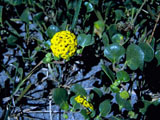
We used our Native Plant Database and selected for Washington and British Columbia on the "State or Province" drop-down menu on the Combination Search. This yielded a list of plants which grew in all those places, from which we selected: Abronia latifolia (Coastal sand verbena). By following the plant link you will get this information:
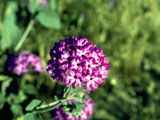
"This is the only yellow Sand Verbena. Two similar species, each differing primarily by flower color, grow along the Pacific Coast. Beach Pancake (A. maritima), from southern California to Mexico, has wine-red flowers, and Beach Sand Verbena (A. umbellata), from British Columbia to Baja California, has flowers varying from deep pink to white."
Abronia is the genus of this plant, while latifolia, maritima, and umbelatta are the species of Abronia of 3 separate, but closely related plants. Abronia latifolia (Coastal sand verbena), as you will see from this USDA Plant Profile Map, is native to British Columbia, Washington, Oregon and California. Then, the text above says that Abronia maritima (Red sand verbena) grows from Southern California to Mexico, while Abronia umbellata (Beach sand verbena) grows from British Columbia to Baja California, which is Mexico. As a result, there are Abronias growing in Canada, the U.S. and Mexico, just slightly different species.
Ordinarily, this is the case because native plants adapt over thousands of years to where they grow natively. The ones in British Columbia have learned to live in Canadian weather, and would probably die in Mexico. The ones in Mexico have learned to live in heat and dry weather, and would probably die in Canada. If you want to experiment more on this rather round about way of getting information, you can follow the same steps. Remember you can't get Mexican plants in our Native Plant Database, but can choose states near the Mexican border, like Texas, New Mexico, Arizona and California, as well as Western Canadian provinces, and check on the Internet to see if that plant grows in Mexico, too.
From the Image Gallery
More Plant Lists Questions
Native flowering plants for Frisco, Texas
August 12, 2015 - Hi There, I recently moved from Ohio, Cleveland to TX, Frisco. Could you please suggest me native flowering plants in my back yard and front yard. I like different flowers.
view the full question and answer
Water-wise plants for clay soil in southern California
September 26, 2013 - My yard is clay. I'm removing turf to put in water-wise plants and bushes. I need some low growing bushes and medium height bushes that will grow in clay and that will stay green in the summer. Hopef...
view the full question and answer
Plants for farm animals from East Greenwich RI
May 03, 2014 - What type of perennial flowers and shrubs are safe to plant around farm animals (dogs, horses, chickens, turkeys) in New England climate?
view the full question and answer
Source for records of Pleistocene flora of Central Texas
December 16, 2013 - Part of your answer to a question from October 12, 2010 is "..moreover, the evidence goes even further back than the 1800s. Studies of Pleistocene deposits from Central Texas showed ancestral cedar p...
view the full question and answer
List of plants native to the Abilene, Texas area
September 15, 2011 - Am looking for direction to a complete list of plants native to the Abilene, Taylor County, Texas area (trees, shrubs, grasses, cacti and other plants that grew here before cultivation, eradication or...
view the full question and answer
| Support the Wildflower Center by Donating Online or Becoming a Member today. |