Native Plants

Q. Who is Mr. Smarty Plants?
A: There are those who suspect Wildflower Center volunteers are the culpable and capable culprits. Yet, others think staff members play some, albeit small, role. You can torture us with your plant questions, but we will never reveal the Green Guru's secret identity.

Did you know you can access the Native Plant Information Network with your web-enabled smartphone?

Ask Mr. Smarty Plants
Ask Mr. Smarty Plants is a free service provided by the staff and volunteers at the Lady Bird Johnson Wildflower Center.

rate this answer

Tuesday - November 01, 2011
From: Flower Mound, TX
Region: Southwest
Topic: Container Gardens, Seeds and Seeding, Soils, Wildflowers
Title: Growing bluebonnets in pot in Flower Mound TX
Answered by: Barbara Medford
QUESTION:
We received a package of bluebonnet seeds along with the DVD Wildflowers: Seeds of History as a gift. In the film, Andrea DeLong mentions that bluebonnets did not grow well in a rich organic soil. What type of soil do you recommend we use to grow bluebonnets in small pots? When do you recommend the seeds be planted?ANSWER:
As you can see from this USDA Plant Profile Map, Lupinus texensis (Texas bluebonnet) grows naturally in Denton and Tarrant Counties,so we are betting the dirt where you are would work just fine. We believe your area could be considered the Cross Timbers and Prairies. We used to garden there, and we can tell you, there is a very confusing mix of soils in that area. Here is the description from our webpage on the Texas Bluebonnet of the soils in which it will grow:
"Limestone/chalky, Sandy Loam, Limestone-based, Calcareous, Sandy, Medium Loam, Clay Loam, Clay, Caliche"
We agree with the statement made by our Director of Horticulture that the bluebonnet neither requires nor likes rich soils, which is probably why it does so well in Texas. This means that buying potting soil at the nursery for your containers of bluebonnets is going to be counter-productive. We are guessing that at least some of your soil is clay, which can mean poor drainage, so we suggest you mix up your own potting soil. Dig enough out of the ground to fill however many pots you plan to use. Mix in some decomposed granite, sand, even compost to improve the drainage in the pot. And don't fertilize, native plants don't need fertilizer because they are accustomed to the climate and dirt in which they already grow. Then, read our How-To Articles: How to Articles How to Grow Bluebonnets and Container Gardening with Native Plants.
From the Image Gallery

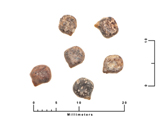
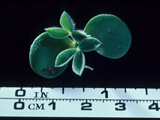
More Seeds and Seeding Questions
What do wildflower seeds look like from Westlake Village CA
February 23, 2014 - I collect seeds from my wild flower garden but can't always tell what part of the dried flower is the actual seed that will reproduce. Is there a resource that shows the seed part of flowers? Than...
view the full question and answer
Germination of seeds of Stephanomeria pauciflora (Brownplume wire lettuce)
February 20, 2015 - I have discovered a very fast growing Stephanomeria pauciflora on property where I work here in Terlingua, TX. At first glance it appears as an invasive weed but on closer inspection with my macro le...
view the full question and answer
Ground cover for steep slope in Washington DC
May 07, 2010 - We have a steep slope in our garden in Washington DC which has sun from noon to sun set. Could you please recommend some low maintenance plants which would be a good ground cover and limit erosion?
view the full question and answer
Savannah Holly True to Seed?
July 03, 2016 - I read your information on Savannah holly. Does this mean that none of the berries will produce a Savannah holly (Ilex x attenuata) but will either be Ilex cassine or Ilex opaca seeds?
Thanks so much...
view the full question and answer
Bluebonnets in memorial garden in cemetery
April 11, 2008 - When is the peak time to scatter bluebonnet seeds? I have a loved one that recently died, and she requested that her body be cremated. She would like her ashes to be mixed with bluebonnet seeds and ...
view the full question and answer
| Support the Wildflower Center by Donating Online or Becoming a Member today. |