Native Plants

Q. Who is Mr. Smarty Plants?
A: There are those who suspect Wildflower Center volunteers are the culpable and capable culprits. Yet, others think staff members play some, albeit small, role. You can torture us with your plant questions, but we will never reveal the Green Guru's secret identity.

Did you know you can access the Native Plant Information Network with your web-enabled smartphone?

Ask Mr. Smarty Plants
Ask Mr. Smarty Plants is a free service provided by the staff and volunteers at the Lady Bird Johnson Wildflower Center.

rate this answer

Saturday - August 06, 2011
From: Houston, TX
Region: Southeast
Topic: Compost and Mulch, Turf, Grasses or Grass-like
Title: Native grasses for central Georgia
Answered by: Guy Thompson
QUESTION:
We've just bought a 1990 circa house in Dallas, Georgia. It sits on a .62 acre lot. One half of the lot is woods, the rest is lawn. The lawn is covered mostly with weeds and wild strawberries. We don't live there full time so landscaping needs to be weed and maintenance free. We would prefer to not mow, but we'll do what we have to do. The soil is Georgia clay, rocks, and hilly. Bermuda grows great there, but I don't like it's encroachment into flower beds. I would prefer to use a native grass that grows slowly and cuts down on mowing. Is there a native grass that we would plug into lawn as it is now and then the plugs would eventually choke out the weeds? Thank youANSWER:
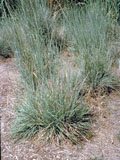
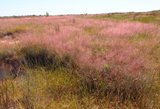
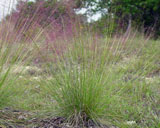
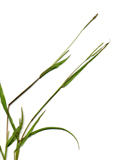
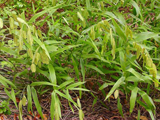
Mr. Smarty Plants believes that your best bet would be to choose from native bunch grasses that grow well in your area. They may not be quite as fast and effective as turf grasses, e.g., Bermuda or carpet grass, in choking out weeds, but they would not be invasive into flower beds. A number of potential choices are listed in this web site for Piedmont grasses, I would suggest Schizachyrium scoparium (Little bluestem), Aristida purpurea (Purple threeawn), Muhlenbergia capillaris (Gulf muhly) or a mixture of these for the sunny areas of your lot. A lower-growing, somewhat weedy choice would be Paspalum setaceum (Thin paspalum), which will grow in full sun but prefers partial sun. For the shady areas near the woods, Chasmanthium latifolium (Inland sea oats) would thrive. Seeds of these species should be available from local suppliers, such as Rock Spring Farm, or Native American Seed. The preferred time for planting the seeds is spring. Till the soil no deeper than two inches; rake level, and roll the soil lightly to make the bed firm. Remove all existing weeds. Because tilling often stimulates weed germination, it is advisable to water the bed one to two weeks before planting. This encourages weed germination. Weed seedlings can be killed by hand-pulling, laying a sheet of plastic over the weeds until the sun cooks them out, or by using a post-emergent, non-residual herbicide. You may need to repeat this procedure several times to ensure a clean bed. Starting with a clean bed is much easier than eliminating weeds after planting. Planting can be done by hand-broadcasting or with a garden planter. If you hand-broadcast seeds, be sure to distribute them evenly, then cover the seeds with one-half inch or less of soil or a light layer of compost. This can be accomplished by raking in two different directions in loose topsoil. Water new plantings regularly to assure germination and root establishment. Optimum growing temperatures are 80 to 95 degrees Fahrenheit during the day, and around 68 degrees Fahrenheit at night.
From the Image Gallery
More Compost and Mulch Questions
Low maintenance replacement garden in Ashburn , VA
April 30, 2009 - We live in Ashburn, VA (Northern VA). Our house is 10 years old and the contractor grade plants have died. We are planning on digging everything up and re-doing the landscaping in our front yard - r...
view the full question and answer
Destructive landscape crews in The Woodlands TX
October 20, 2012 - Hi. We need help. We recently moved to a house where landscape crews have been blowing away the leaf litter from the front yard for many years. The underbrush was also cleared long ago. The result...
view the full question and answer
Problems with Eastern hemlock in Greenville SC
July 02, 2009 - Dear Mr. Smarty Plants,
I have a beautiful, young, 5 and a half foot tall Eastern Hemlock. I purchased and planted it two years ago in the fall. It has been doing very well all this spring. And ne...
view the full question and answer
Yucca blades damaged by weedeater in Hellertown PA
July 05, 2011 - Can I cut off the blades of a Yucca plant that have been eaten on the edges with a weed wacker and are very unsightly looking? Can they be cut back to the flower shaft?
view the full question and answer
Is mulch from hackberry and chinaberry trees safe for flowerbeds?
September 17, 2014 - We had to remove several large hackberry and china berry trees. Is its mulch safe to use in garden and in flower beds?
view the full question and answer
| Support the Wildflower Center by Donating Online or Becoming a Member today. |