Native Plants

Q. Who is Mr. Smarty Plants?
A: There are those who suspect Wildflower Center volunteers are the culpable and capable culprits. Yet, others think staff members play some, albeit small, role. You can torture us with your plant questions, but we will never reveal the Green Guru's secret identity.

Did you know you can access the Native Plant Information Network with your web-enabled smartphone?

Ask Mr. Smarty Plants
Ask Mr. Smarty Plants is a free service provided by the staff and volunteers at the Lady Bird Johnson Wildflower Center.

rate this answer

Tuesday - April 05, 2011
From: Harlingen, TX
Region: Southwest
Topic: Wildlife Gardens
Title: Bird-friendly plants for South Texas
Answered by: Guy Thompson
QUESTION:
Which are the best plants that provide food (perennials, shrubs, trees, and vines) to attract birds to my backyard garden? (I have water and cover and would like to make sure I have the 10 best plants to add to attract birds, especially cardinal and oriole.) Thank you!ANSWER:
You are fortunate to live in an area having such colorful and intresting birds. As you probably know, bird-watching is also big business in South Texas. Birders come from all around the world to see birds like the Altamira and Audubon Orioles, which occur only in the southern border areas of the United States. Mr. Smarty Plants was surprised to find so little published advice on how local residents can enhance their communities as birding hot spots.
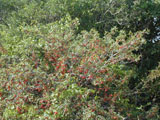
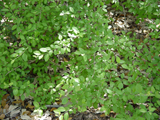
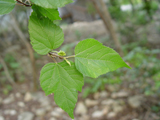
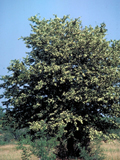
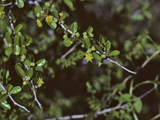
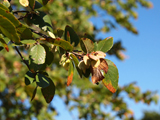
Since you have two essentials, water and cover, let me concentrate on the food requirements. Orioles and Cardinals love most kinds of fruit. Non-native fruit, such as figs and plums, will be welcomed by these birds. The Altamira and Audubon Orioles love to forage in dense thickets. You might consider whether you should increase your cover with something like Forestiera pubescens (Stretchberry) (or elbowbush), which provides berries as well as cover. A number of other bird friendly plants are listed among natives in the book A Field Guide to Common South Texas Shrubs, by R. B. Taylor, J. Rutledge, and J. G. Herrera. This book may be available at your local library.
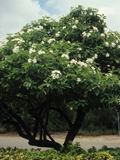
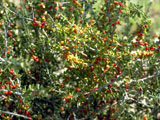
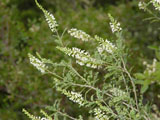
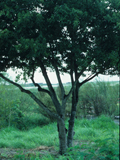
Among other listed natives in the book are the following: Mahonia trifoliolata (Agarita) (early spring berries), Rubus flagellaris (Northern dewberry) (spring berries), Morus microphylla (Littleleaf mulberry) (berries in spring), Ehretia anacua (Anacua) (summer food), Cordia boissieri (Mexican olive) (Hummingbirds, late summer fruit), Schaefferia cuneifolia (Desert yaupon) (winter berries), Eysenhardtia texana (Texas kidneywood) (cover, attracts insects, seeds), Colubrina texensis (Hog-plum) (fall and winter fruit and seeds, cover), Ulmus crassifolia (Cedar elm) (fall seeds) and Celtis laevigata (Sugar hackberry). A variety such as this would provide food and cover for many species of songbirds, including orioles and Cardinals, throughout the year. Other native species suitable for South Texas are shown on a Lady Bird Johnson Wildflower Center web site. You can obtain many of these plants and also additional advice at one of the suppliers also listed on our web site. The Rancho Lomitas Plant Nursery, in particular, has several of them in stock.
Good luck, and thanks for helping to preserve our colorful birds.
From the Image Gallery
More Wildlife Gardens Questions
Hummingbird plants for OH
October 08, 2011 - We live in Toledo, Ohio and would like to have a Hamelia patens or firebush to attract hummingbirds; we are in their migration path. Would it survive outdoors or do we need to pot and move it indoors ...
view the full question and answer
Wildlife Attracting Plants for a Shady Patio
July 03, 2014 - We have a concrete patio that receives 2-3 hours of sunlight a day, so the only plants we will be able to grow will be in container. We are looking for plants that do well in shade, and containers and...
view the full question and answer
Forage plants for deer in Central Texas
December 06, 2014 - Looking for best forage plants and seed for deer forage, Canyon Lake-New Braunfels, Tx. Have searched listings, but areas are NE or other and not relevant to my location. Your time much appreciated. ...
view the full question and answer
Bird attracting plants in Northeast U.S.
March 22, 2004 - What plants will attract birds in zone 6 (Northeast) in the spring and early summer?
view the full question and answer
Xeriscape demonstration garden
October 30, 2007 - I am working with the city of Schertz to rejuvenate a xeriscape demonstration garden. We want to plant a hummingbird/butterfly garden using native plants. The current bed is currently overrun with ber...
view the full question and answer
| Support the Wildflower Center by Donating Online or Becoming a Member today. |