Native Plants

Q. Who is Mr. Smarty Plants?
A: There are those who suspect Wildflower Center volunteers are the culpable and capable culprits. Yet, others think staff members play some, albeit small, role. You can torture us with your plant questions, but we will never reveal the Green Guru's secret identity.

Did you know you can access the Native Plant Information Network with your web-enabled smartphone?

Ask Mr. Smarty Plants
Ask Mr. Smarty Plants is a free service provided by the staff and volunteers at the Lady Bird Johnson Wildflower Center.

rate this answer

Friday - September 24, 2010
From: Powell,, OH
Region: Midwest
Topic: Wildlife Gardens, Poisonous Plants
Title: Horse-friendly plants for Powell OH
Answered by: Marilyn Kircus
QUESTION:
I am looking for horse friendly plants, i.e., shrubs, trees, bushes, etc. that can be planted in wet area in Ohio. Thank you in advance for your assistance.ANSWER:
I hope you mean plants, that when eaten by horses, are not known to make them sick. You will probably have to fence the horses away from these plants as they will probably eat most of them. I spent several hours trying unsuccessfully to find plants that no horse would eat. But you might check on recommendations in horse forums. I found several discussions about horses eating plants there. Horses will also damage the bark of even large trees so you will have to always protect the trunks.
I started by using the Recommended Plants for Ohio from the Ladybird Johnson Wildlife’ Center’s web page. Then I narrowed the choices to full sun and wet soils. (I suspect you may have a low place in your pasture so assumed full sun.) I then narrowed the resulting list to shrubs and got six of them, then looked for the trees and got twelve.
I checked each one to see if it was listed in Cornell’s Plants Poisonous to Livestock. None of these show up there as toxic.
Shrubs:
Betula pumila Bog birch
Hibiscus moscheutos L. Crimson-eyed rosemallow
Physocarpus opulifolius Atlantic ninebark
Rosa palustris Swamp rose
Salix bebbiana Bebb Willow
Trees:
Amelanchier canadensis Canadian serviceberry
Betula populifolia gray birch
Fraxinus nigra Black ash
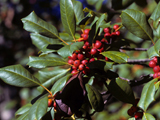
Ilex opaca American Holly
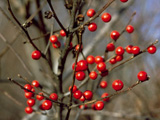
Ilex verticillata Common winterberry
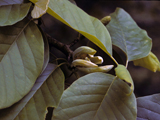
Magnolia acuminata Cucumber tree
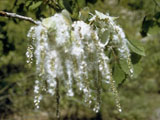
Populus tremuloides Quaking aspen
Ptelea trifoliata Wafer ash
Quercus macrocarpa Burr oak
Quercus palustris Pin oak
Salix amygdaloides Peach-leaf willow
Salix nigra Black willow
You can find more information and usually pictures of these plants when you click the links. And if you need plants for part shade, you can go back and pick the Recommended Plants for Ohio and then pick shrubs and trees that grow in wet soils in part shade.
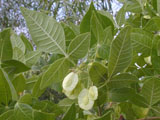
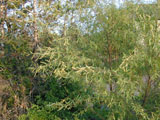
From the Image Gallery
More Wildlife Gardens Questions
Hungry turtles trample pond in Houston Texas
October 17, 2011 - I have a very large back yard pond (actually, a former swimming pool) that's home to a bullfrog, four Red-eared slider turtles, and scads of gambusia (little mosquito eating fish). I'd like to add n...
view the full question and answer
Plants for a mixed hedgerow for privacy and for the birds
May 07, 2010 - What are the best native plants for a mixed hedgerow in a small backyard? I want privacy (heights 5'-10') and bird friendly.
Thank you for your information.
view the full question and answer
Wildlife management tax exemption
May 15, 2007 - I live on 10 acres of prairie land near Austin. I want to learn about drying and pressing and gluing and preserving wildflowers as art in pictures and bookmarks and cards. My attempts have failed an...
view the full question and answer
Native Bird Feeding in Belton, TX
July 04, 2011 - We recently bought a bird feeder and a huge bucket of non-native bird seed (I'm not sure if the whole seed mix is non-native, but I believe most of the mix is). The birds go through the whole bird fe...
view the full question and answer
Appropriate riverbed and quail habitat plantings for southwest OK
September 27, 2009 - Mr Smarty Pants, I have an area in extreme SW Oklahoma along the Red River. What native plants could I plant that are both appropriate for the sandy/saline soils in the vegetative area of the river b...
view the full question and answer
| Support the Wildflower Center by Donating Online or Becoming a Member today. |