Native Plants

Q. Who is Mr. Smarty Plants?
A: There are those who suspect Wildflower Center volunteers are the culpable and capable culprits. Yet, others think staff members play some, albeit small, role. You can torture us with your plant questions, but we will never reveal the Green Guru's secret identity.

Did you know you can access the Native Plant Information Network with your web-enabled smartphone?

Ask Mr. Smarty Plants
Ask Mr. Smarty Plants is a free service provided by the staff and volunteers at the Lady Bird Johnson Wildflower Center.

rate this answer

Saturday - July 17, 2010
From: Leander, TX
Region: Southwest
Topic: Grasses or Grass-like
Title: Grass identification books for Texas
Answered by: Nan Hampton
QUESTION:
We live northwest of Austin, on Nameless Road. Have MANY types of native grasses--can you recommend a good book, with photos, to use in identifying? Also, what native grasses are good for attracting bob white? turkey? Thanks so much.ANSWER:
This particular Mr. Smarty Plants thinks these three books are the best and easiest to use:
1. Grasses of the Texas Hill Country by Brian and Shirley Loflin with lots of photographs. This book is available for purchase in the Wildflower Center Store.
2. Grasses of Southern Oklahoma and North Texas: A Pictorial Guide by Chuck Coffey and Russell Stevens with even more photographs per species. This book can be purchased directly from the Samuel Roberts Noble Foundation.
3. Common Texas Grasses: An Illustrated Guide by F. W. Gould with line drawings. This is a little more technical in its descriptions, but has lots of useful information.
You can see a list of Key Seed-Producing Plants for Quail from Texas A&M Forages of Texas.
We certainly wouldn't recommend any of the non-native grasses or other non-native plants (e.g., Johnsongrass or sweetclover, Melilotus spp.) that they list, but the native Paspalum spp. or other native species recommended in this article would be good to add to your land (if they aren't there already) for the quail and turkey. You can check the nativity of a plant of interest by searching for it in our Native Plant Database using its botanical name. If you find it there, it is definitely a North American native. Here are a few of the species in their list that are natives:
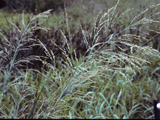
Paspalum floridanum (Florida paspalum)
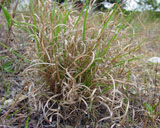
Panicum hallii (Hall's panicgrass)
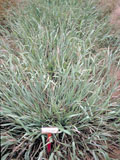
Panicum virgatum (switchgrass)
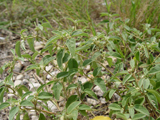
Croton monanthogynus (prairie tea)
Desmanthus illinoensis (Illinois bundleflower)
Euphorbia marginata (snow on the mountain)
I would be willing to bet that you already have most, if not all, of these on your property already.
You might also like to read the article, Integrating deer, quail and turkey habitat, by Robert K. Lyons and Tim F. Ginnett.
You can also go to the Texas Parks and Wildlife Texas Plant Information Database page and search by ecological region, county or specific location. You can then search for attributes in that subset such as 'Wildlife/Livestock Food'.
TPWD also has two articles, Wild Turkey in the Post Oak Savannah and Blackland Prairie and Bobwhite Quail in the Post Oak Savannah and Blackland Prairie with habitat information and important wild foods.
Here are photos of the above listed plants from our Image Gallery:
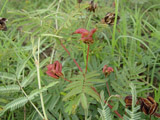
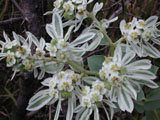
More Grasses or Grass-like Questions
Does Calyptocarpus vialis (Horseherb) compete with turf grasses
October 05, 2015 - For my yard in central Austin
Does horse herb, Calyptocarpus vialis help or damage the growth of native short grasses? The grasses include Curly Mesquite and Blue Gamma planted early in the spring or...
view the full question and answer
Mexican Feathergrass not Blooming in San Diego
September 22, 2015 - Hello, I planted seven Mexican Feathergrass plant about four months ago and only one of them has got the "feathers" at the tip of its grasses. The others are growing nice and tall as well, but not f...
view the full question and answer
Flowering native perennials for St. Louis
August 09, 2007 - Dear Mr. Smarty Plants,
I'm trying to landscape a yard that sits on rocky clay soil in St. Louis, MO. The front yard has been difficult because of its brutal southern exposure - the afternoon sun ...
view the full question and answer
Reseed Buffalograss in Early Spring in San Antonio
January 14, 2011 - When is best time to put down Buffalo grass seed in 78260 area. How much dirt should I put over existing sodded buffalo grass, which is now sparse?
view the full question and answer
Native alternative for liriope
September 20, 2011 - I am looking for native alternatives to liriope for use in sun to part shade, moderate moisture planting beds. Would prefer evergreen options.
view the full question and answer
| Support the Wildflower Center by Donating Online or Becoming a Member today. |