Native Plants

Q. Who is Mr. Smarty Plants?
A: There are those who suspect Wildflower Center volunteers are the culpable and capable culprits. Yet, others think staff members play some, albeit small, role. You can torture us with your plant questions, but we will never reveal the Green Guru's secret identity.
Did you know you can access the Native Plant Information Network with your web-enabled smartphone?

Ask Mr. Smarty Plants
Ask Mr. Smarty Plants is a free service provided by the staff and volunteers at the Lady Bird Johnson Wildflower Center.

rate this answer

Tuesday - May 04, 2010
From: Colorado Springs, CO
Region: Rocky Mountain
Topic: Trees
Title: Can a soapberry tree be grown in Colorado Springs?
Answered by: Barbara Medford
QUESTION:
I live in Colorado Springs and I was wondering if it is possible to grow a soapberry tree here?ANSWER:
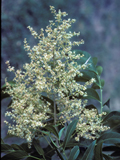
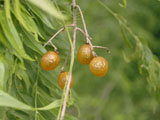
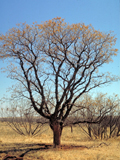
Sapindus saponaria var. drummondii (western soapberry) is native to Colorado; however, this USDA Plant Profile does not show it as growing in El Paso County, but rather in two counties in extreme southeastern Colorado, which, if we properly remember our Colorado geography, is an area of plains. Colorado Springs, in USDA Plant Hardiness Zones 5a to 5b and at over 6000 ft. in elevation, would probably prove a challenge to a plant that grows more profusely in Texas, Oklahoma and the southern portion of Kansas. Also, it is only considered hardy from Zones 6 to 9. In the Growing Conditions paragraph from our Native Plant Database, below, the most telling obstacle is in the last line, which we have highlighted. If you can't buy a started plant, and there are no wild plants around for seed, you could have a real problem.
Water Use: Low
Light Requirement: Sun , Part Shade
Soil Moisture: Moist , Dry
CaCO3 Tolerance: High
Soil Description: Rich, limestone soils.
Conditions Comments: An attractive and hardy tree, useful as a specimen or in groves. Can become a large tree in deep soil. In shallow soil it often remains a small tree. The fruits are considered to be poisonous to humans although they produce a good lather in water and are used in Mexico as a laundry soap. Both females and males have fruits; males are showier. Soapberry often suckers and form groves. Tolerant of drought, wind, heat, poor soil, air pollution and other city conditions. Not affected by disease or insects. Currently difficult to find in the nursery trade.
One possibility would be to take cuttings and attempt to root them. This would be feasible if you travel somewhere they grow naturally, and you got permission to take several cuttings. If you are interested in trying that, and we don't guarantee they will flourish, read this article from North Carolina State University Extension Plant Propagation byh Stem Cuttings: Instructions for the Home Gardener. From this USDA Forest Service website on Sapindus saponaria var. drummondii, we learned that hardwood or softwood cuttings taken in May, June or July can root in 5 to 6 weeks, if properly treated.
From our Native Plant Image Gallery:

More Trees Questions
Cedar trees dying in CO
July 18, 2011 - We have mature cedar trees at the home we bought in SW Colorado. The large ones have begun to die. Can too much water kill a cedar tree and is there anything I can do to keep them alive?
view the full question and answer
Live oaks exhibiting white foam spots from Round Rock, TX
June 08, 2014 - We have several native very large Live Oak in our backyard, and this summer we have noticed white foam spots on the branches. We live in Round Rock next to the Williamson County Park. The spots look...
view the full question and answer
Reducing Allergens in Yards and Gardens
January 31, 2012 - What are some allergen-free native plants to Central Texas that thrive in the soil and can survive in the weather?
view the full question and answer
Oak saplings in Boerne TX
August 02, 2010 - Is there anything I can do to kill the oak tree saplings that come up around my oak tree? I have a nice raised flower bed around the tree and now it's full of these saplings.
Thanks for your help...
view the full question and answer
Mountain laurel with new leaves or new seed pods
May 11, 2008 - Each spring, my Texas Mountain Laurel seems to put new leaves only on selected branches (actually trunks), and put on seed pods on other trunks. It seems to be mutually exclusive: trunks with new seed...
view the full question and answer
| Support the Wildflower Center by Donating Online or Becoming a Member today. |