Native Plants
Q. Who is Mr. Smarty Plants?
A: There are those who suspect Wildflower Center volunteers are the culpable and capable culprits. Yet, others think staff members play some, albeit small, role. You can torture us with your plant questions, but we will never reveal the Green Guru's secret identity.
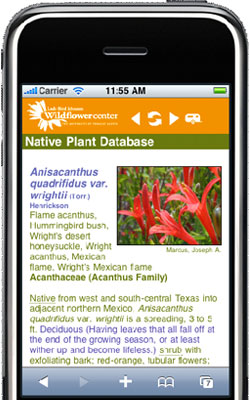
Did you know you can access the Native Plant Information Network with your web-enabled smartphone?

Ask Mr. Smarty Plants
Ask Mr. Smarty Plants is a free service provided by the staff and volunteers at the Lady Bird Johnson Wildflower Center.
rate this answer

Monday - April 05, 2010
From: Houston, TX
Region: Southwest
Topic: Wildlife Gardens
Title: Native trees that host moths and butterflies for birds in Houston Texas
Answered by: Nan Hampton
QUESTION:
I have learned that non-native or alien plants do not attract the insects that the birds need to live on. I would like to know which native trees for central Texas have the greatest hosting capacity for moths/butterflies that provide food for the birds in the area?ANSWER:
The Houston Chapter of the Native Plant Society of Texas has an excellent list of Native Host Plants for Southeast Texas Butterflies in its Native Plant Information Pages. Their list includes trees, shrubs, wildflowers and grasses and gives specific recommendations for specific butterflies or moths. Since you are from Houston I am assuming that these are the best choices for you. However, if you are looking for trees for Central Texas, most of these species are also native to Central Texas. Also, on our Recommended Species page we have a list of plants that serve as hosts to moths and butterflies—"Butterflies and Moths of North America". While all the species on the "Butterflies and Moths of North America" list are native to North America, they are not necessarily native to Texas and might not do well in your area. Be sure to check the "Distribution" and "Growing Conditions" to see if they are suitable for your area. Here are a few choices from these lists:
Ptelea trifoliata (common hoptree)
Carpinus caroliniana (American hornbeam)
Chionanthus virginicus (white fringetree)
Cercis canadensis var. texensis (Texas redbud)
Diospyros virginiana (common persimmon)
Diospyros texana (Texas persimmon)
Populus deltoides (eastern cottonwood)
Prosopis glandulosa (honey mesquite)
Prunus serotina (black cherry)
Sapindus saponaria (wingleaf soapberry)
Here are photos of the plants listed above from our Image Gallery:
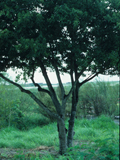
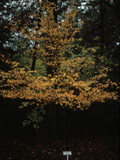

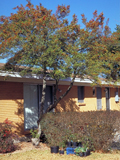
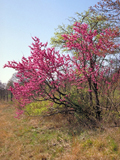
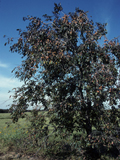
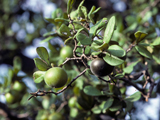

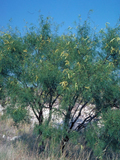
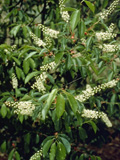

More Wildlife Gardens Questions
Native nectar plants for hummingbirds in Central Texas
April 24, 2008 - Ref: Cen.Tx. Hummingbird plants
I am seeking a list of appropriate plants with lots of nectar to attract hummingbirds in Central Texas. I live in Hays County between Kyle & Wimberley in a mostly ...
view the full question and answer
Plants for butterflies, birds and bees at 7000 feet in Arizona
April 28, 2009 - What are the best plants for feeding and sheltering bees, butterflies, and birds in/near Flagstaff AZ. We are at 7,000 feet elevation and I am finding it very difficult to create a backyard habitat.
view the full question and answer
Xeriscape demonstration garden
October 30, 2007 - I am working with the city of Schertz to rejuvenate a xeriscape demonstration garden. We want to plant a hummingbird/butterfly garden using native plants. The current bed is currently overrun with ber...
view the full question and answer
Birds attracted to wax myrtles in Austin
January 12, 2010 - Hello!
We are considering planting Wax Myrtles in our relatively small SW Austin backyard. I'm excited about its ability to create quick privacy, but I was wondering specifically, what types of bird...
view the full question and answer
Wildlife garden for PA
October 12, 2010 - Dear Mr. Smarty plants,
I am a student at Allegheny College, Meadville, PA. I am working on my senior thesis, and I hope to submit a successful proposal to plant a native species and wildlife garden ...
view the full question and answer
| Support the Wildflower Center by Donating Online or Becoming a Member today. |