Native Plants

Q. Who is Mr. Smarty Plants?
A: There are those who suspect Wildflower Center volunteers are the culpable and capable culprits. Yet, others think staff members play some, albeit small, role. You can torture us with your plant questions, but we will never reveal the Green Guru's secret identity.

Did you know you can access the Native Plant Information Network with your web-enabled smartphone?

Ask Mr. Smarty Plants
Ask Mr. Smarty Plants is a free service provided by the staff and volunteers at the Lady Bird Johnson Wildflower Center.

rate this answer

Monday - December 07, 2009
From: Seattle, WA
Region: Northwest
Topic: Deer Resistant, Shrubs, Trees
Title: Why is Rhus aromatica more deer resistant from Seattle
Answered by: Barbara Medford
QUESTION:
I have a large area that I would like to cover with Rhus aromatica. My landscaper says that in his experience, Rhus typhina and glabra in this area are heavily browsed by deer. I noticed in your database that Rhus aromatica is rated "high" in terms of deer resistance. The other species of Rhus are not rated. Is there a chemical difference between the two plants that would make one more deer resistant than the other?ANSWER:
Your landscaper is correct, both Rhus typhina (staghorn sumac) and Rhus glabra (smooth sumac) are heavily browsed by deer. If you will notice in the introduction to the Deer-Resistant Species list you mentioned, deer tend to avoid aromatic plants. One of the common names of Rhus aromatica (fragrant sumac) is "Polecat Bush." We have no personal experience with the plant, but we have heard that some believe it just plain stinks.
There are two problems there: If the deer are hungry enough because of loss of habitat, drought or other reasons, they will hold their noses and eat anything. The second problem is that Rhus aromatica (fragrant sumac) is native nowhere farther west than Missouri. At the Lady Bird Johnson Wildflower Center, we are dedicated to the use, care and propagation of plants native not only to North America but to the area in which they are being grown. We are not sure how the conditions in Washington differ from the eastern part of the United States, but it is a strong indicator that the plant would not prosper there and, in fact, might not even be commercially available there. Rhus typhina (staghorn sumac) shares the same area of nativity, and is probably not viable in Washington, either. Only Rhus glabra (smooth sumac) is native to Washington, and, in fact, is the only sumac native to all 48 contiguous states.
Sumacs often form dense thickets, spreading from underground runners, and are difficult to eliminate once they become established. Even if you could obtain and grow the Rhus aromatica, you might not enjoy a strong-smelling, heavily overgrown field all that much.
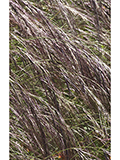
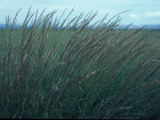
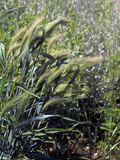
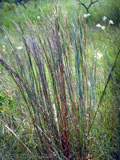
If we might make an alternate suggestion, deer do not seem to care much for grasses. There are six grasses on the Deer-Resistent Species list that are native to Washington. We are going to list them, and you can follow each link to find out more about the appearance and sun requirements of the grasses.
Deer-resistant grasses native to Washington:
Aristida purpurea (purple threeawn)
Bouteloua curtipendula (sideoats grama)
Elymus canadensis (Canada wildrye)
Eleocharis rostellata (beaked spikerush) - pictures
Schizachyrium scoparium (little bluestem)
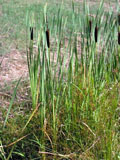
Typha latifolia (broadleaf cattail)
From our Native Plant Image Gallery:
More Deer Resistant Questions
Deer resistant, drought- and shade-tolerant plant for Pennsylvania
August 14, 2012 - Hello,
I need a deer/drought resistant, shade tolerant, rocky soil perennial. I would like it to have some winter appeal. I live outside of Philadelphia, PA.
Thank you so much for your time...
view the full question and answer
Protecting guavas from deer
August 06, 2007 - I have large guavas that the deer love to tear up rubbing their new antlers. When do I need to re-cover the plants with anti-deer nets to be sure to get ahead of them? One night too late and they ar...
view the full question and answer
Deer eating Non-native Asiatic Jasmine in Georgetown, TX
October 22, 2015 - Is there a spray or granular material that will prevent deer from eating asiatic jasmine?
view the full question and answer
Deer-resistant plants for South Carolina
December 09, 2005 - I have purchased a home in SC in an area that is overun with deer. What flowering plants for that area do deer not eat.
view the full question and answer
Deer Resistant Plants for Northern Virginia
September 22, 2010 - I'm looking for deer resistant shade plants in Northern Virginia. The deer have devoured my hostas, impatiens and native toad lily plants, day lilies.
view the full question and answer
| Support the Wildflower Center by Donating Online or Becoming a Member today. |