Native Plants

Q. Who is Mr. Smarty Plants?
A: There are those who suspect Wildflower Center volunteers are the culpable and capable culprits. Yet, others think staff members play some, albeit small, role. You can torture us with your plant questions, but we will never reveal the Green Guru's secret identity.

Did you know you can access the Native Plant Information Network with your web-enabled smartphone?

Ask Mr. Smarty Plants
Ask Mr. Smarty Plants is a free service provided by the staff and volunteers at the Lady Bird Johnson Wildflower Center.

rate this answer

Thursday - September 03, 2009
From: Lihue, HI
Region: Hawaii
Topic: Non-Natives
Title: Non-native wedelia and dayflower in Lihue HI
Answered by: Barbara Medford
QUESTION:
I have wedelia as ground covering, day flower or commelinaceae takes over. What can I use or spray to rid myself of the day flower problem?ANSWER:
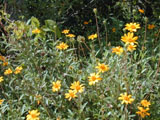
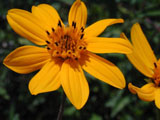
That old devil "common names" has struck again, but this has to be the most confusing one yet. In our Native Plant Database, there is one member of the Wedelia genus, Wedelia texana (hairy wedelia) synonyms Wedelia hispida, Zexminia hispida. This plant is endemic to Texas, member of the Asteraceae family. Often called Zexminia, it is a small shrub, from 8 inches to 3 ft. tall, evergreen in southern parts of its range. Here are pictures from the University of Texas Archive of Central Texas Plants Pictures of Wedelia. Then we started hunting a little further for infomation on the plant, and found on the Internet material referred to as Wedelia paludosa, which is not in our Native Plant Database, but seems to be native to the tropical Americas. One of the first things we learned about that plant is how very invasive it is, how it loves lush, moist territory, like Hawaii. In particular, you might want to read the negative comments from this Dave's Garden Plant Files Wedelia paludosa.
Just searching on the common name "wedelia" we found this website from the University of Florida Turfgrass Science by Dr. Phil Busey, where it was also named as a member of the family Asteraceae. and looked and sounded a lot like our Texas wedelia, except ours is adapted to the Edwards Plateau which is NOT a wet and lush environment.
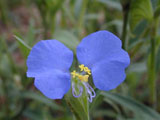
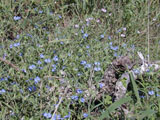
Hoping for more enlightenment on the two plants we're talking about, we went on to the genus Commelina, of which there are 7 species native to North America, but none to Hawaii. We chose Commelina erecta var. angustifolia (whitemouth dayflower) as example, because it is native to Texas, as well as 27 other states, and we are familiar with it. It is perennial, and blooms blue from March to October; we found no indication that it is considered invasive, but it is often considered a weed in Texas gardens.
So, here is our dilemma: At the Lady Bird Johnson Wildflower Center, we are committed to the use, propagation and protection of plants native not only to North America but to the area in which they are being grown. We are talking about two plants, neither of which is native to Hawaii, and you are asking us to give you elimination help with one of them. Our first thought is that the two plants apparently bloom a long time, much of it concurrent, and we think the yellow flowers of the Wedelia and the blue flowers of the dayflower would be rather attractive together. Second thought, you don't like the plant that is coming up? Pull it out, very direct, and much less environmental impact.
But you asked for a spray. We recommend neither for nor again herbicides, so you will have to make your own decision on that. Dayflowers are in the plant class Liliopsida, or monocot. There are herbicides specifically for killing grassy weeds, also monocots, but we don't actually know if it would kill the dayflower. This article from the Seattle Times Before you begin spraying, know how weed killers do their job lays out the case for and against various kinds of weed killers.
Pictures of Wedelia paludosa from Google
From our Native Plant Image Gallery
More Non-Natives Questions
Foxglove safety from England
April 21, 2013 - Hi, regarding safety of foxgloves grown near edible plants - foxgloves are good companion plants for vegetables, in case of root vegetables they improve their storage life and quality. Foxgloves prote...
view the full question and answer
Non-native house plants stressed from Allen TX
July 30, 2011 - I have three house plants that were plants I received from my father's funeral services. They were healthy for about two years and then we added some soil and now they are turning brown and appear t...
view the full question and answer
Dying branches on non-native buddleias in Horseshoe Bend TX
September 19, 2010 - Our Black Knight buddleias are developing branches that die. The leaves just turn brown and the whole branch dies then another and finally the whole plant dies.
Do you know what could be causing this...
view the full question and answer
Expected color of non-native crapemyrtles in Natchitoches LA
August 04, 2009 - just bought 8 new crepe myrtle trees that are suppose to be dynamite red in color. However, the few bulbs that are on them when you break them open they are white! Does this mean they are going to be ...
view the full question and answer
Clearing out non-native Himalayan blackberry
January 25, 2009 - Can you recommend a way to clear an area of Himalayan blackberry? We have cut the canes back but wish to eliminate them completely so that we can replant that area with native plants attractive to wil...
view the full question and answer
| Support the Wildflower Center by Donating Online or Becoming a Member today. |