Native Plants
Q. Who is Mr. Smarty Plants?
A: There are those who suspect Wildflower Center volunteers are the culpable and capable culprits. Yet, others think staff members play some, albeit small, role. You can torture us with your plant questions, but we will never reveal the Green Guru's secret identity.
Did you know you can access the Native Plant Information Network with your web-enabled smartphone?

Ask Mr. Smarty Plants
Ask Mr. Smarty Plants is a free service provided by the staff and volunteers at the Lady Bird Johnson Wildflower Center.

rate this answer

Sunday - August 09, 2009
From: Georgetown, TX
Region: Southwest
Topic: Wildflowers
Title: Backyard bluebonnets in Georgetown, TX
Answered by: Barbara Medford
QUESTION:
I am growing bluebonnets in my backyard in Georgetown, TX. Even with the drought, I have had blooms all summer and still have two plants blooming. Is this normal? Thanks for all the work you all do to keep Texas beautiful.ANSWER:
Is this normal? What is normal in Texas weather and plants? Is it natural? Absolutely. We recently received a similar question from someone else in Central Texas who had planted some seeds in February and had bluebonnets blooming in July. An excerpt from that answer:
"It is unusual, but not unheard of. Bluebonnets, like other native plants, have learned to live with their environment and to survive. In order to survive, they must reproduce. In order to reproduce, they must flower in order to set seed. Your seeds were planted at just about the time the bluebonnets are beginning to bloom. Under ordinary circumstances, those seeds would have just stayed quietly in the ground, waiting for better days. They have a very hard coat which allows them to stay viable for several years, if necessary. Changing temperatures and the friction of the soil itself will eventually cause some, not all, of the seeds to sprout. For whatever reason, the little alarm clock in that seed's genetic makeup said "Time to get up!" and it did. The fact that it has been so very hot, but you have been giving the area water, may have had something to do with it. Please watch your bluebonnets and see if they set seed.
Here are the propagation instructions for Lupinus texensis (Texas bluebonnet):
"Propagation Material: Seeds
Description: Propagate by sowing seed or planting seedlings in fall.
Seed Collection: Allow the bluebonnet to reseed itself by leaving the seed pods intact on the plant until they turn from yellow to brown."
You will likely get more bluebonnets coming up there in the Spring. We will probably never know if those are from seeds dropped by your July crop, seeds planted in February, or seeds that have been transported there and have been waiting for years to grow. Some seeds are simply not viable, and never grow, but obviously you got some good ones."
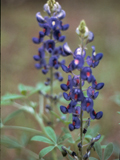
Images from our Native Plant Image Gallery:

More Wildflowers Questions
Growing Mountain Laurel in Georgia
May 28, 2011 - While in Texas a few months ago I saw your beautiful Sophora Secundiflora blooming and decided to bring one home to Gainesville, GA and try my luck. I have not planted it yet and it is doing well in ...
view the full question and answer
Wildflowers for an April wedding in McAllen TX
April 16, 2010 - I live in McAllen Texas and plan to get married April 2011. My dream is to get married at my parents ranch. I visualize beautiful wildflowers and I am not sure what to plant and when. Any suggestion...
view the full question and answer
Blue vervain native to Indiana
January 06, 2003 - I have a species I need to know if it is native to my area (southern Indiana) - Blue Vervain (Verbena hastata)
view the full question and answer
Latest time to mow bluebonnets from Chappell Hill TX
February 13, 2014 - The past few years, my bluebonnets have been overwhelmed by tall grass. I could have solved this by mowing later, but I was always afraid of mowing new bluebonnet plants. When is the latest time I can...
view the full question and answer
Wildflower seed planting time in Northwest US
August 07, 2007 - What is the best time to plant wildflower seeds in the northwest United States?
view the full question and answer
| Support the Wildflower Center by Donating Online or Becoming a Member today. |