Native Plants

Q. Who is Mr. Smarty Plants?
A: There are those who suspect Wildflower Center volunteers are the culpable and capable culprits. Yet, others think staff members play some, albeit small, role. You can torture us with your plant questions, but we will never reveal the Green Guru's secret identity.

Did you know you can access the Native Plant Information Network with your web-enabled smartphone?

Ask Mr. Smarty Plants
Ask Mr. Smarty Plants is a free service provided by the staff and volunteers at the Lady Bird Johnson Wildflower Center.

rate this answer

Friday - July 17, 2009
From: Austin, TX
Region: Southwest
Topic: Invasive Plants
Title: Is Jerusalem thorn native to Central Texas?
Answered by: Barbara Medford
QUESTION:
I was reading about Retama (Parkinsonia aculeata) which is native to South America and naturalized throughout Texas and the southern US. I also read that it is considered an invasive plant species in Australia and has spread aggressively there. Is Parkinsonia aculeata now considered native, adapted, or invasive to Central Texas?ANSWER:
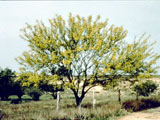
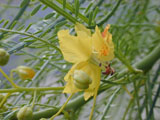
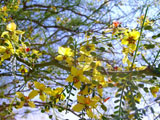
Jerusalem thorn is an evergreen tree, growiing to 12 to 36 ft. tall, blooms yellow April to August, has medium water use, needs sun or part shade. It is subject to freeze damage if grown too far north, even as far as North Texas.
This USDA Plant Profile shows the plant growing in some parts of South and Central Texas and the Big Bend area. It is native to the Southwestern United States and Mexico. It has escaped cultivation in Florida and California, both magnets for invasive plants, native or non-native, and it is regarded there as an invasive weed.
in answer to your question. a native plant is just that, its status doesn't change, as long as it is growing in the area where it is native. So, yes, it's native to Central Texas. So far as we know, it has not become invasive in Central Texas. Native plants seldom do become invasive in their home territory, as they and the other native plants around them have all learned to live in the environment over eons of experience with the soil, climate, rainfall, etc. That environment has its own checks and balances, and human intervention, bringing in non-native plants or through urban development, frequently causes the development of invasive plants and, sometimes, the near-extinction of native plants.

More Invasive Plants Questions
Smarty Plants Exotic Species
March 26, 2004 - What is an Exotic Species?
view the full question and answer
Information on edible tubers of hog potato from Austin
November 10, 2011 - I inquired a while back about hog potato or Hoffmannseggia glauca. You gave me some information on the plant but no information on when the plant produces the edible tubers. Also how long does it take...
view the full question and answer
Removing bermudagrass from buffalograss in Smithville TX
May 01, 2013 - I have a lawn created two years ago with buffalo grass sod in Smithville, TX. Recently several areas of bermudagrass have started to flourish in the buffalo grass lawn. Can you recommend a herbicide...
view the full question and answer
Problems with Habiturf in Austin
May 10, 2014 - I have been trying to establish a Habiturf lawn in my back yard. It is approximately a 1,000 square foot area and this last seeding was the third over about one and a half years. I just recently over ...
view the full question and answer
Dog-proof grass from The Woodlands TX
April 26, 2013 - I am looking for a hardy grass that can tolerate female dogs urine. Zoysia was suggested but I am concerned about it being invasive. Any suggestions?
view the full question and answer
| Support the Wildflower Center by Donating Online or Becoming a Member today. |