Native Plants

Q. Who is Mr. Smarty Plants?
A: There are those who suspect Wildflower Center volunteers are the culpable and capable culprits. Yet, others think staff members play some, albeit small, role. You can torture us with your plant questions, but we will never reveal the Green Guru's secret identity.

Did you know you can access the Native Plant Information Network with your web-enabled smartphone?

Ask Mr. Smarty Plants
Ask Mr. Smarty Plants is a free service provided by the staff and volunteers at the Lady Bird Johnson Wildflower Center.

rate this answer

Wednesday - July 01, 2009
From: Austin, TX
Region: Southwest
Topic: Compost and Mulch, Transplants, Grasses or Grass-like
Title: Planting from pots in summer in Austin
Answered by: Barbara Medford
QUESTION:
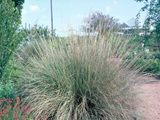
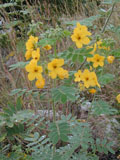
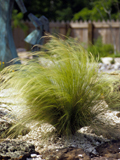
It's the last week in June and temperatures are going to be at 100 or more all week. I've some plants that I'm wondering about transplanting to an exposed site in this heat: muhlenbergeria lindheimeriana (one gallon)and cassia lindheimeriana (4 in"), and several 4" pots of Mexican wire grass. Should I wait for a break (back down into the 90s?)or a few cloudy days? Once they have a couple days break, they will still have to contend with months more of sun, heat and water from the hose. I remembering reading or hearing that, beyond the problems of heat stress, too much moisture in this heat can be detrimental to unestablished plants that normally take a lot of heat in dry weather. In order to establish these plants, I'll be watering in the evenings. Do I have any options, or do I wait until mid September?ANSWER:
We feel your pain, we garden in Austin, too. Our first impulse was to say: One word - WAIT! Then, we looked at your question more closely and realized you were not talking about moving plants from one garden spot (in the dirt) to another; you had the plants still in (probably) black plastic nursery containers. We hope you are keeping them in shaded conditions and watering regularly because, if not, the roots are probably already fried. Our suggestion is that you slather some mosquito repellant on yourself and plant those in the evening, after the sun has gone down. Make sure the soil is already prepared for good drainage and easy adaptation by the roots. Working some compost into the soil before you ever put the plant in there is a very good idea. This will help with drainage, make trace elements available to the plant roots and, in general, be gentle with those roots. On your evening planting expedition, get the plants into the soil as quickly as possible, and then water very gently by sticking a hose deep down in that nice compost and letting it dribble very slowly. If there is still daylight, or the next morning, cover the root areas with a good quality shredded hardwood mulch. This will keep the sun off those baby roots, cool the ground, and help to hold in moisture. Continue to water very gently (no overhead) every other morning or so (to help prevent mildew) and don't fertilize. Any plant being transplanted right now is a plant in stress, and stressed plants don't need fertilizer.
More Grasses or Grass-like Questions
Carex texensis for Gainesville, Florida
August 31, 2013 - I am interested in planting Carex texensis in Gainesville Florida (zone 9). The site is part shade with little water. However, I do not see it listed as being used anywhere in Florida. Is it restric...
view the full question and answer
Revegetating a hillside in western Washington state
October 10, 2012 - Removing several downed trees across my dock demolished the native plants growing on the hillside and the contractor pulled out their remains. The area faces east on an open freshwater bay. Close to...
view the full question and answer
Stabilizing a shale slope in Virginia
April 08, 2009 - I have family members who recently built a new home in Virginia. The site required extensive excavation resulting in a large 30 foot, nearly vertical, shale wall behind the house. They now want to r...
view the full question and answer
Controlling weeds in Buffalograss in Pflugerville, TX
September 26, 2009 - Hi Mr. Smarty Plants,
After a visit to the wildflower center a few years ago, my husband and I decided to do buffalo grass from sod in our new house. We love the way it looks, but I've been neglec...
view the full question and answer
Hillside Erosion Control for Gainesville GA
August 07, 2013 - I have a steep bare hill and the runoff from it is heavy this year. I need help with a fast growing groundcover that will help control erosion and runoff. Planting on the hill is difficult because you...
view the full question and answer
| Support the Wildflower Center by Donating Online or Becoming a Member today. |