Native Plants

Q. Who is Mr. Smarty Plants?
A: There are those who suspect Wildflower Center volunteers are the culpable and capable culprits. Yet, others think staff members play some, albeit small, role. You can torture us with your plant questions, but we will never reveal the Green Guru's secret identity.
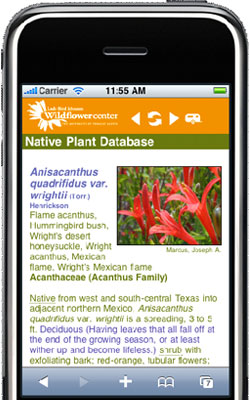
Did you know you can access the Native Plant Information Network with your web-enabled smartphone?

Ask Mr. Smarty Plants
Ask Mr. Smarty Plants is a free service provided by the staff and volunteers at the Lady Bird Johnson Wildflower Center.

rate this answer

Thursday - June 11, 2009
From: Saluda, VA
Region: Mid-Atlantic
Topic: Poisonous Plants
Title: How toxic are wild cherries for horses?
Answered by: Nan Hampton
QUESTION:
I purchased a beautiful piece of heaven in the rural suburbs. I have three horses and grow my own hay. Unfortunately, I have just learned the woods surrounding my field is lined with Black Walnut, Wild Cherry, and Black Locust. I had the walnut trees cut down and one cherry, only to discover an entire tree line of cherry trees 25-30 feet high. We bale the hay in the early spring (May), and it seems to be considered weed free. How dangerous is it to have even a few dried cherry leaves in it? I thought they were toxic when fresh, but you say dried is even higher toxicity. I can have a lot of trees cut down or sell the property. I am now afraid to put them on the field or produce my own hay.ANSWER:
I can only tell you what the horse experts say. Here is what the article "Poisonous Plants" by Willis Lamm of Trail Blazer Magazine says about choke cherry and wild cherry (Prunus):"Chokecherries, growing in bushes up to 12 feet high, are popular for their jelly producing berries. They are common throughout the US, often found along roadsides or creek bottoms. Unfortunately the leaves, which are particularly toxic when stressed or wilted, as well as the bark from chokecherries and wild cherries are cyanide producing.
Death in horses can occur literally in minutes after the horse has ingested the leaves. The horse will appear to have trouble breathing, show flared nostrils and lose bowel and urinary control. Lack of coordination and trembling may also appear, along with agitation. A severely poisoned horse will drop to the ground, kick a few times, then die.
Poisoned horses can be saved, however usually veterinary help cannot arrive in time as the effects of cyanide poisoning progress rapidly."
The Poisonous Plants of Pennsylvania has more information about the chemicals responsible for Prunus spp. toxicity. Other toxic plant databases (Poisonous Plants of North Carolina, Cornell University Plants Poisonoous to Livestock, Canadian Poisonous Plants Information System) also list various Prunus spp. as poisonous.
Since the potential for poisoning does exist, I would recommend that you ask your veterinarian to visit your property to consult with you about whether you should remove all the cherry trees.
More Poisonous Plants Questions
Are bald cypress cones toxic to dogs?
October 27, 2013 - Are bald cypress tree seed pods poisonous? to dogs? We just got a rescue dog and we go out in the yard with her. But now that we are into fall and the pods are falling. She goes right to them. Are...
view the full question and answer
Poisonous cherries from trees in Angola, IN
June 25, 2009 - Are there any poisonous cherries from trees in Indiana?
view the full question and answer
Horses exposed to toxic plants in Charles Town WV
July 13, 2010 - Mr. Smarty Pants, I have a big problem on my hands! Four of my horses have gotten into something toxic, but I must find out what. I found an unusual plant that a mare chased her foal away from. It's ...
view the full question and answer
Eliminating silverleaf nightshade from Albuquerque NM
June 07, 2014 - I have silverleaf nightshade in my yard and would like to eradicate it (yeah, I know, good luck!) or at least control it. Do you have any suggestions?
view the full question and answer
Poisonous Trees
September 23, 2004 - Are redbuds and catalpa trees poisonous?
view the full question and answer
| Support the Wildflower Center by Donating Online or Becoming a Member today. |