Native Plants

Q. Who is Mr. Smarty Plants?
A: There are those who suspect Wildflower Center volunteers are the culpable and capable culprits. Yet, others think staff members play some, albeit small, role. You can torture us with your plant questions, but we will never reveal the Green Guru's secret identity.
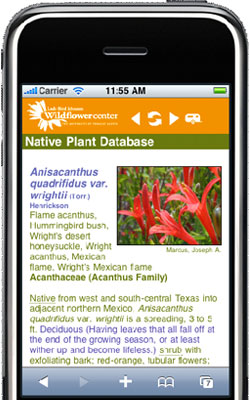
Did you know you can access the Native Plant Information Network with your web-enabled smartphone?

Ask Mr. Smarty Plants
Ask Mr. Smarty Plants is a free service provided by the staff and volunteers at the Lady Bird Johnson Wildflower Center.

rate this answer

Tuesday - June 02, 2009
From: Americus, GA
Region: Southeast
Topic: Poisonous Plants
Title: Are Cleveland Pear trees in Georgia toxic to horses and/ or dogs?
Answered by: Jimmy Mills
QUESTION:
Are flowering Cleveland Pear trees (Pyrus calleryana) poisonous to horses and/or dogs? I have read that the prunus species are, does that include pear trees? Please help!ANSWER:
It is true that members of the genus Prunus (Plums, Peaches, Apricots, and Cherries) can be toxic. The toxic compounds are cyanogenic glycosides (chemicals that are converted to cyanide or prussic acid when eaten). The compounds are mostly in the leaves and in the seed. Apples (genus Malus) also contain these compounds, but I had not seen pears (genus Pyrus) being listed as containing the glycosides until i saw this article from the Kitsap Conservation District in Washington state. The compounds are more concentrated in wilted leaves than in fresh leaves.
I have included a list of databases of toxic plants that will allow you to learn what other plants to look out for.
Cornell University Plants Poisonous to Livestock
Universtiy of Pennsylvania's Poisonous Plants Database
Poisonous Plants of North Carolina
Additionally, here are databases that are specific for plants poisonous to horses.
To search the lists, I recommend using the scientific name since those names are generally standard, whereas the common names often vary in spelling and usage.
Since the Lady Bird Johnson Wildflower Center is committed to the care and propagation of plants native not only to North America but to the area in which they are being grown, I would be remiss not to point out that Pyrus calleryana is a non-native plant (introduced from Asia) and is considered an invasive species in some parts of the country.
More Poisonous Plants Questions
Lantana induced rash
October 20, 2011 - What should I use for a rash caused by a Lantana scratch on my arm
view the full question and answer
Defense against poison ivy from The Woodlands TX
March 24, 2014 - Hi and thank you in advance for your help.
My husband is allergic to Poison Ivy, Oak, Sumac, or something in our yard. We need someone who is very knowledgeable to come and identify any poisonous pla...
view the full question and answer
Plants for exotic pets
May 14, 2012 - I need to know what are some good native non-toxic plants for these species:
Porcelain roach (Gyna lurida) from Kenya, Africa.
Giant cave roach (Blaberus giganteus) from Central and South Americ...
view the full question and answer
Plant with poisonous thorns
July 27, 2008 - Is there a bush or tree out there that has thorns on it that can make you swell and cause you to feel like you can hardly move you're whole hand.
view the full question and answer
Are any cherry trees poisonous from Clovis CA?
April 30, 2011 - Are there some cherry trees that are poisonous? if so, how do you identify them?
view the full question and answer
| Support the Wildflower Center by Donating Online or Becoming a Member today. |