Native Plants

Q. Who is Mr. Smarty Plants?
A: There are those who suspect Wildflower Center volunteers are the culpable and capable culprits. Yet, others think staff members play some, albeit small, role. You can torture us with your plant questions, but we will never reveal the Green Guru's secret identity.

Did you know you can access the Native Plant Information Network with your web-enabled smartphone?

Ask Mr. Smarty Plants
Ask Mr. Smarty Plants is a free service provided by the staff and volunteers at the Lady Bird Johnson Wildflower Center.

rate this answer

Thursday - April 23, 2009
From: Lebanon, IN
Region: Midwest
Topic: Non-Natives
Title: Toxicity of non-native Royal Empress tree
Answered by: Barbara Medford
QUESTION:
We want to plant some fast-growing trees for shade for my horses. My friend wants to use Royal Empress trees. Can you tell me if these are toxic to horses (and also goats)? I have a lot of clay in the soil on my property.ANSWER:
The first thing we want to do is urge you NOT to plant the Royal Empress tree, for reasons you will learn from this Plant Conservation Alliance Alien Working Group website on Paulownia tomentosa. It is a native of western and central China, and can quickly become invasive, crowding out or destroying more desirable native plants. As in the case in other fast-growing trees, it is a weak tree and not long-lived. At the Lady Bird Johnson Wildflower Center, we recommend only plants native not only to North America but to the area in which the plants are being grown. Plants native to an area will be adapted to the climate, rainfall and soils, and require less fertilizer, water and maintenance.
Now, for what plants are poisonous to horses, excerpted from a previous Mr. Smarty Plants answer:
Answer: First of all, Mr. Smarty Plants wants to refer you to some plants to AVOID for your horses. Please see the lists from the following sources:
10 Most Poisonous Plants for Horses from EquiSearch.com
Poisonous Plants from Trailblazer Magazine
Toxic Plants: Horses from the ASPCA
Horse Nutrition: Poisonous Plants from Ohio State University
Next, Mr. Smarty Plants refers you to our Recommended Species page to find native plants that are commerically available in Indiana. You can select 'Indiana' from the map or pulldown menu and then NARROW YOUR SEARCH by selecting 'Tree' from the Habit (general appearance) option.
You might also check for recommended species near your area (Boone County) on the Indiana Native Plant Society website.
Finally, Mr. Smarty Plants refers you to some toxic plant databases that you can check for the plants you like. These would be: Poisonous Plants of North Carolina, Cornell University Plants Poisonous to Livestock, Texas Toxic Plant Database, and University of Pennsylvania Poisonous Plants. When you find a tree that you would like to plant in your pasture, you can compare it with these lists to see if it is safe for your horses. From the Indiana Recommended species list mentioned above, Mr. Smarty Plants has chosen several species and checked them against the toxic plant databases. These species are:
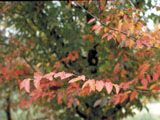
Carpinus caroliniana (American hornbeam)
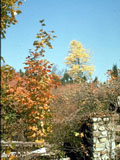
Carya ovata (shagbark hickory)
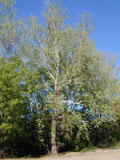
Platanus occidentalis (American sycamore)
More Non-Natives Questions
Deer resistant plants from New Braunfels TX
August 31, 2012 - I have a 1/2 yard covered by a tree, shady. Bermuda grass previous owner planted has all turned brown this summer. I don't have lots of money to work with but would love to landscape that side of fr...
view the full question and answer
Shade tolerant plants for privacy from Larchmont NY
April 19, 2014 - Love your site! We have a 4'x4'x50' stone wall, full sun, with a planting bed 30"H by 24"D. We're looking for privacy, so a hedge with pruning is needed. We have looked at Ilex Crenata (8'),...
view the full question and answer
Planting distance for non-native crepe myrtles in Lawton OK
June 14, 2009 - We just bought Tonto Crepe Myrtle trees. I was just curious how far away from the house we should plant them.
view the full question and answer
Information about Maui Red Starflower
April 29, 2008 - I can't find any information on MAUI RED STARFLOWER. I found some in Houston Texas & the card says sun, blooms spring to frost, showy bloom, good in clusters.
MY QUESTION was to find out if it is a...
view the full question and answer
Sad Germanders in Johnson City Texas
September 16, 2011 - I have some grey bush germanders that never seem to do well although they did at first when I planted them four years ago. They have sun and dappled shade on the south side of the house. A friend in ...
view the full question and answer
| Support the Wildflower Center by Donating Online or Becoming a Member today. |