Native Plants

Q. Who is Mr. Smarty Plants?
A: There are those who suspect Wildflower Center volunteers are the culpable and capable culprits. Yet, others think staff members play some, albeit small, role. You can torture us with your plant questions, but we will never reveal the Green Guru's secret identity.

Did you know you can access the Native Plant Information Network with your web-enabled smartphone?

Ask Mr. Smarty Plants
Ask Mr. Smarty Plants is a free service provided by the staff and volunteers at the Lady Bird Johnson Wildflower Center.

rate this answer

Tuesday - March 31, 2009
From: San Antonio, TX
Region: Southwest
Topic: Edible Plants
Title: Native Fruits for Texas Hill Country
Answered by: Nina Hawkins
QUESTION:
Can you recommend a species of blackberry for San Antonio or any other fruit that will be compatible in my garden? (mostly Hill Country Native, thanks to Ladybird). The local store has raspberries, but I do not see anything encouraging on-line about their cultivation in Texas! (I'm from New York!)ANSWER:
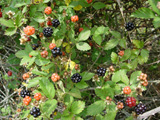
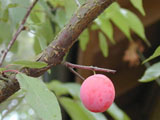
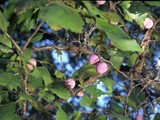
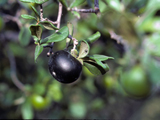
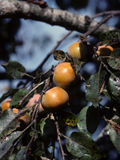
Mr. Smarty Plants has listed below some fruit-bearing plants that are native to Texas and are edible for humans. The Mexican plum and Texas persimmon would be particularly suited to your garden of Hill Country natives, since they are also native to this region of Texas. More extensive information about fruits native to Texas can be found in Delena Tull's book called Edible and Useful Plants of Texas and the Southwest. Mr. Smarty Plants is not an expert on non-native fruits that can be grown in Texas, but found this Aggie Horticulture web article that you may find helpful. According to the article, raspberries are indeed not adapted to conditions in Texas and would perform particularly poorly in the calcareous soils in the San Antonio area. For blackberries, you are in luck. Blackberries, native and non-native alike, are notoriously easy to grow here in Texas and elsewhere... meaning that they can also easily become invasive. However, as long as you prune out the older canes that have already produced, you should be able to keep them in check. For useful information on the cultivation and suggested varieties of blackberries and other food plants commonly grown in Texas you may want to check out Howard Garrett's book, Texas Organic Vegetable Gardening. Mr. Smarty Plants wishes you many fruitful years to come!
Rubus trivialis (southern dewberry)
Prunus mexicana (Mexican plum)
Diospyros texana (Texas persimmon)
Diospyros virginiana (common persimmon)
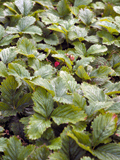
Fragaria virginiana (Virginia strawberry)
Fragaria vesca (woodland strawberry)

More Edible Plants Questions
Jelly made from local plums from Amarillo TX
July 29, 2011 - On Wednesday, August 5, 2009 you answered a question on native plants in the Austin area in which you wrote:"Two kinds of local plums have also been used to make jellies: Mexican Plum (Prunus mexican...
view the full question and answer
Is the fruit of Melothria pendula edible?
November 22, 2014 - Is the fruit of Melothria pendula edible?
view the full question and answer
Bird Attracting Shrub for NH
July 03, 2016 - I am trying to attract birds to my newly built home's front yard.
I have no foliage out front near our picture window. I live in Londonderry, NH. What bush or shrub can I plant that will attract bird...
view the full question and answer
Wine from Ampelopsis arborea?
September 06, 2006 - Hello, can you eat or make wine from the fruit of Ampelopsis arborea? I have found a few vines that are very fruitful and are ready to pick!
view the full question and answer
Fruit trees for Buckeye AZ
May 16, 2010 - I am moving to Buckeye Az from Utah and would like to know what type of fruit trees I can grow.
Thanks!
view the full question and answer
| Support the Wildflower Center by Donating Online or Becoming a Member today. |