Native Plants

Q. Who is Mr. Smarty Plants?
A: There are those who suspect Wildflower Center volunteers are the culpable and capable culprits. Yet, others think staff members play some, albeit small, role. You can torture us with your plant questions, but we will never reveal the Green Guru's secret identity.

Did you know you can access the Native Plant Information Network with your web-enabled smartphone?

Ask Mr. Smarty Plants
Ask Mr. Smarty Plants is a free service provided by the staff and volunteers at the Lady Bird Johnson Wildflower Center.

rate this answer

Wednesday - January 28, 2009
From: Charleston, SC
Region: Southeast
Topic: Seed and Plant Sources
Title: Plants for a new duck pond that are duck proof
Answered by: Jimmy Mills
QUESTION:
Sir. I live in Charleston SC. I dug a pond for ducks in my backyard. I want to plant grass and anything else that will grow around the pond that the ducks won't want to eat up. What should I buy to plant? Thank you very kindly.ANSWER:
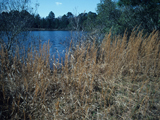
One thing to keep in mind is that eating plants is what ducks do, especially young plants. One strategy is to provide the ducks with plants that you don't mind them eating such as sedges and grasses that can deter the ducks from your other ornamentals..
Mr. Smarty Plants will provide a couple of links that deal with maintaining ponds for ducks, and some sugestions for plants to grow around your pond.
One good source is "Plants for Ponds and Pens", in PDF format to download from "Leaflets and Articles" on the British Waterfowl Association page which gives suggestions for establishing plants in duck enclosures. Another is the Metzer Farms Duck and Goose Hatchery whose web site gives some pointers about eastablshing duck ponds.
Here are a few suggestions for your pond:
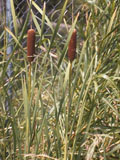
Common cat-tail Typha latifolia (broadleaf cattail). This typical marsh perennial can form dense stands. Its aggressive growth will need some manaagement.
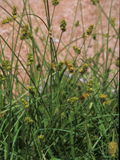
Yellow fruit Sedge Carex annectens (yellowfruit sedge)
Broomsedge Bluestem Andropogon virginicus (broomsedge bluestem)
Swamp Sunflower Helianthus angustifolius (swamp sunflower)
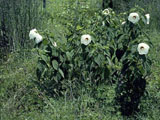
Crimson-eyed rose-mallow Hibiscus moscheutos (crimsoneyed rosemallow)
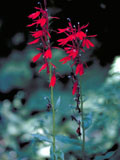
Cardinalflower Lobelia cardinalis (cardinalflower)
You can contact the Charleston chapter of the South Carolina Native plant Society for information.
Whatever plants you choose, you might want to check them with the Toxic to Animals database from the Veterinary Medicine Library at the University of Illinois at Urbana-Champaign just to be safe.

More Seed and Plant Sources Questions
Native plant nursery
July 07, 2005 - I want to grow wildflower starts for tough-to-grow plants for retail and commercial sale. And I prefer organic, but, jeez, one step at a time. Any guidance on the ins and outs of this business?
D...
view the full question and answer
Sources for cedar and Texas sedge seeds in Central Texas
December 27, 2008 - Where can I buy cedar and Texas sedge seeds in the central Texas area? What will be the cost? I have found a few nurseries who sell 4 inch pots, but that is very costly for the size of area I want to ...
view the full question and answer
Honeysuckle bush for San Antonio, Tx
June 14, 2009 - I'm looking for a gift for my brother, living in San Antonio. He loves the native honeysuckle that we both remember from our childhoods. I think I'd like to get him a honeysuckle bush rather than ...
view the full question and answer
Replacing bermudagrass with buffalograss in San Antonio
October 28, 2009 - We inherited a back yard full of weeds when we bought a fixer-upper a couple of years back in San Antonio, TX. Since we moved in, some "native" bermuda started growing in the yard. I think the "nat...
view the full question and answer
Source for sabadilla lily (Scheonocaulon officinale)
April 25, 2007 - Hi, i'm Dutch and living in Iquitos Amazone Peru. Now i'm looking for the plant sabadilla lilly (sapadilla lilly?). This is a natural pesticide.
Where does this plant grow, where can I find the pla...
view the full question and answer
| Support the Wildflower Center by Donating Online or Becoming a Member today. |