Native Plants

Q. Who is Mr. Smarty Plants?
A: There are those who suspect Wildflower Center volunteers are the culpable and capable culprits. Yet, others think staff members play some, albeit small, role. You can torture us with your plant questions, but we will never reveal the Green Guru's secret identity.
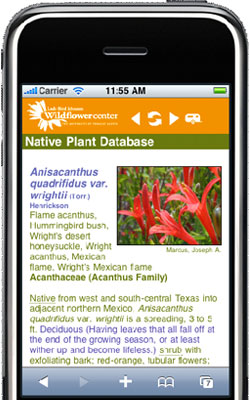
Did you know you can access the Native Plant Information Network with your web-enabled smartphone?

Ask Mr. Smarty Plants
Ask Mr. Smarty Plants is a free service provided by the staff and volunteers at the Lady Bird Johnson Wildflower Center.

rate this answer

Saturday - January 24, 2009
From: Albany, NY
Region: Northeast
Topic: Groundcovers
Title: Groundcover beneath a maple
Answered by: Barbara Medford
QUESTION:
I am looking for something to spread out in the shade of a maple tree. I have tried lily of the valley, ferns, pachysandra, ivy, hosta, euonymus.. nothing spreads out.ANSWER:
You have two problems with establishing ground covers under the native maple tree. We have no idea which maple you have, so we chose one native to New York, Acer saccharum (sugar maple), as an example. The first problem is shade from that tree. With its huge leaves, the maple is a very good shade tree, and even understory plants need some amount of sun. Then, when the leaves fall, they cover the ground, shading the groundcovers out even more, and then you have freezing weather. The second problem is the tree itself, defending its turf, if you will. The maple tree is somewhat allelopathic, which means it exudes chemicals to inhibit the growth of other plants competing with the maple for nutrition, light and water. The maple is also known for roots close to the surface and even above the surface of the ground. All tree roots tend to be in the upper 6 to 12 inches of the soil anyway, and they can crack concrete, mess with foundations and certainly compete successfully with wimpy groundcover. What we would recommend is that, instead of trying to promote plants that will probably not survive, no matter what they are, why not mulch to the dripline (outer edge of the foliage) of that maple? It will protect the roots, keeping them cooler in the summer and warmer in the winter, and, as it decomposes, add to the nutrition in the soil, as well as holding moisture in, requiring less watering. A good shredded-bark mulch is our favorite. Granted, it will have to be replaced from time to time, but so far, that's what you've been having to do with your groundcovers, right? We find mulch attractive, and looks much better than straggly, weedy groundcovers.
We usually give a lecture on not using non-native plants, because at the Lady Bird Johnson Wildflower Center we are dedicated to the care and propagation of plants native not only to North America but to the area in which they are being grown. Most of the ones you have tried are non-native, but in this case it really doesn't matter, natives probably wouldn't do any better under that tree.
More Groundcovers Questions
Native plants for morning sun in Pembroke MA
October 07, 2009 - Could you please suggest native groundcover,plants/shrubs/grasses for eastern facing slope which gets morning sun? It is my front yard which slopes down toward driveway so it would be a major focal po...
view the full question and answer
Planting Garry Oak in Kinnikinnick in WA
May 09, 2015 - I want to plant a Garry Oak tree in my backyard in an area currently covered in kinnikinnick planted by the previous homeowner. The kinnikinnick covers a large area - about 10 feet in diameter. Even...
view the full question and answer
Groundcover for sunny slope in Minnesota
May 24, 2016 - Hi, I'm from Apple Valley, MN. We backyard has large slope areas that get sun through out the day. We have huge weed and buck thorn problem. Can you please suggest a good ground covering plant that gr...
view the full question and answer
Looking for cover
June 18, 2007 - I live iin Schaumburg, IL and have a difficult spot (extreme sun and heat in summer (South Side of house). I'm looking for a very short ground cover - < or + to 6 inchees. Does Arabis hirsuta fit t...
view the full question and answer
Destruction of Straggler Daisy in Austin
December 18, 2011 - I hate Straggler Daisy. Not to be offensive, but it appears from other posts on this site that you, Mr. Smarty Plants, and many others would like to treat it as a protected species. It is taking over ...
view the full question and answer
| Support the Wildflower Center by Donating Online or Becoming a Member today. |