Native Plants

Q. Who is Mr. Smarty Plants?
A: There are those who suspect Wildflower Center volunteers are the culpable and capable culprits. Yet, others think staff members play some, albeit small, role. You can torture us with your plant questions, but we will never reveal the Green Guru's secret identity.

Did you know you can access the Native Plant Information Network with your web-enabled smartphone?

Ask Mr. Smarty Plants
Ask Mr. Smarty Plants is a free service provided by the staff and volunteers at the Lady Bird Johnson Wildflower Center.

rate this answer

Friday - July 25, 2008
From: Berlin, NH
Region: Northeast
Topic: Soils, Edible Plants, Shrubs
Title: Failure of highbush blueberry plant to produce in New Hampshire
Answered by: Barbara Medford
QUESTION:
One of my highbush blueberry plants completely stopped producing. What can I do to revive it?ANSWER:
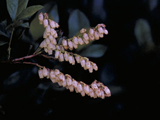
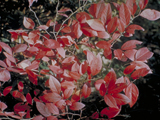
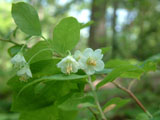
Vaccinium corymbosum (highbush blueberry) is native to New Hampshire and most cultivated blueberries are varieties or hybrids of the highbush blueberry. They are accustomed to wet to dry acid, rocky soils, and are extremely susceptible to chlorosis due to alkalinity in the soil.
Proper fertilizing of blueberries can be a little tricky. They evolved with shallow roots in low-nutrient acidic environments, and roots are easily burned by fertilizer. Yet, to get good fruit production demands fertilizer in late winter or early spring and again in late spring. One recommendation is for slow-release acid fertilizers such as those for rhododendrons and evergrees. Avoid concentrated fertilizers near the blueberries, and do not fertilize later than June. Another possibility is to use shredded hardwood bark or composted bark to mulch and shelter the roots from the cold and also to continue to add acidity to the soil, without disturbing the shallow roots for fertilizers.
Some of the stresses on blueberries that can cause reduction in production are insufficient sun, insufficient water or poor soil drainage. Young bushes need minimal trimming. Fruit is produced on second-year wood, so excessive pruning should be avoided. Most cultivars require cross-pollination with another cultivar. They are pollinated by bees, so avoid insecticides to encourage the natural bee population.
That's about all we could find that might be affecting the production of your highbush blueberry. Compare the conditions in which they are growing in your New Hampshire garden (approx. Zone 5a) and see what is wrong that you can fix.
More Shrubs Questions
Problems with Silverado Sage in Pearland, TX.
July 28, 2012 - Hi,
We have three Silverado Sage bushes we planted last year. They did great during the drought. However, this winter they had a severed leaf drop of mostly just the centers of them. These cente...
view the full question and answer
Esperanza failing to bud out in Georgetown TX
March 28, 2010 - I planted esperanza shrubs last summer and they did well. I did not prune them back in the winter. They are not showing any signs of life (No greenery) Will the plants start to form leaves and flow...
view the full question and answer
Looking for a male Southern Wax Myrtle in Newport News, VA.
August 20, 2012 - We are looking to add more southern wax Myrtles to make a hedge row with them. We already have one in the ground that is a female. I have called around to see if anyone sells the male but i keep get...
view the full question and answer
Chlorosis in yaupon from San Angelo TX
April 08, 2012 - Thank you for your information on the yaupon holly. We just finished clearing out the mulch and the red ground cover that popped up. I will quit watering it as much as the rest of the plants. Our y...
view the full question and answer
Buffaloberry from Grandma
June 25, 2008 - I have a "BUFFALO BERRY" that my Grandma brought back from South Dakota.It is approx.8yrs.old.All was well until this spring.It was budding out when we had a very hard freeze and got 3" of snow.Now...
view the full question and answer
| Support the Wildflower Center by Donating Online or Becoming a Member today. |