Native Plants

Q. Who is Mr. Smarty Plants?
A: There are those who suspect Wildflower Center volunteers are the culpable and capable culprits. Yet, others think staff members play some, albeit small, role. You can torture us with your plant questions, but we will never reveal the Green Guru's secret identity.

Did you know you can access the Native Plant Information Network with your web-enabled smartphone?

Ask Mr. Smarty Plants
Ask Mr. Smarty Plants is a free service provided by the staff and volunteers at the Lady Bird Johnson Wildflower Center.

rate this answer

Wednesday - April 02, 2008
From: Whitney, TX
Region: Southwest
Topic: Non-Natives
Title: Removing a hackberry stump from a non-native fig tree
Answered by: Barbara Medford
QUESTION:
I have a fig tree that is at least 50 years old. A hackberry tree is growing up through the fig. I have cut it back several times (it is probably 3 inches in diameter at ground level), but have been hesitant to put any type of poison for fear of killing the fig. Do you have any suggestions?ANSWER:
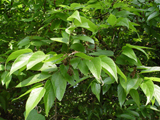
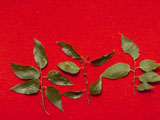
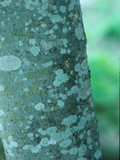
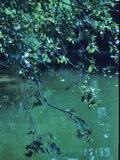
We are assuming that you are dealing with a Ficus caricus (common fig) with a Celtis laevigata (sugarberry), also known as hackberry, growing up through it. The bad news is that the hackberry is a plant native to North America, and therefore is probably better adapted to live here than the fig tree. The common fig is a temperate species from the Middle East and southern Europe. However, we can understand your desire to keep your 50-year-old fig tree. We agree that using poisons on that stump could very easily damage the roots of the fig. As long as you can keep it from leafing out, the hackberry will have to die, because it needs the leaves for manufacturing food for the tree's survival. However, you probably need to do some more damage to the stump now, to keep it from crowding the roots of the fig. Try digging down (gently!) around the roots of the hackberry, trying to identify the hackberry roots as opposed to the fig roots. With a pruning saw, saw off the hackberry roots as far from the stump as you can. Keep working the stump back and forth, trying to find roots that can be cut to free the stump from the ground. If you can get to the point that you can get the stump out of the ground in this manner, you should have disposed of the problem. Keep an eye on it, and if any sprigs come up, yank them out while they're little. In self defense, tree roots will often try to put out sprouts in a last gasp attempt to keep going. The fig has very extensive roots, going in all directions, so it probably has root capacity to spare if you accidentally damage one root, just try to avoid it if you can. Click this link for a page of images of the Ficus caricus. Below are some pictures of various parts of the hackberry, to hopefully help you identify which tree you are dealing with.
More Non-Natives Questions
Saving non-native crape myrtles watered with salt water in McAllen TX
May 27, 2010 - I have a crape myrtle plants that were accidentally watered with salt water from a purifier that was drained. They are dying and turning brown. What can I do to revive them?
view the full question and answer
Possible invasiveness of non-native Eragrostis curvula
February 04, 2008 - I have just moved to Keller, TX and am trying to establish a xeriscape plan for our property. I chose to plant weeping love grass as I learned it was a native plant and did not require fertilizing, a...
view the full question and answer
How to Deal With Goutweed?
June 12, 2015 - Hi, I'm wondering what plants (groundcover) would best compete against goutweed. It's coming up all around some existing potentilla shrubs and some nice bulbs and prairie perennials. I would hate to...
view the full question and answer
Non-native upside down tomatoes in Edmonton AB
September 19, 2010 - Due to early frost, I have brought my upside down tomato plant into the house & have hung it in the basement. What type of grow lamp can I use? I just have the overhead light & standard lamps at my di...
view the full question and answer
Illegal to remove an orange blossom from ground in Florida from Atlantis FL
March 28, 2012 - Is there any law that prevents someone from removing an orange blossom from the ground in Florida?
view the full question and answer
| Support the Wildflower Center by Donating Online or Becoming a Member today. |