Native Plants

Q. Who is Mr. Smarty Plants?
A: There are those who suspect Wildflower Center volunteers are the culpable and capable culprits. Yet, others think staff members play some, albeit small, role. You can torture us with your plant questions, but we will never reveal the Green Guru's secret identity.

Did you know you can access the Native Plant Information Network with your web-enabled smartphone?

Ask Mr. Smarty Plants
Ask Mr. Smarty Plants is a free service provided by the staff and volunteers at the Lady Bird Johnson Wildflower Center.

rate this answer

Monday - October 15, 2007
From: Austin, TX
Region: Southwest
Topic: Diseases and Disorders, Transplants, Trees
Title: Newly planted anacacho leaf browning
Answered by: Barbara Medford
QUESTION:
I have just put my anacacho orchid into the ground and its leaves are turning brown and falling off. Is that normal for this time of year, or have I shocked it? What can I do to ensure its health?ANSWER:
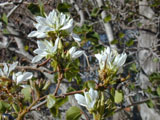
Bauhinia lunarioides (Texasplume) is native in canyons and arroyos in limestone hills in Kinney, Presidio and Gillespie or Llano counties, which means it's pretty much a desert dweller and needs well drained sand loam limestone. However, it should be all right in Austin, particularly if it is given some afternoon shade and moderate moisture. The problem here, though, may be transplant shock. After an often cool, wet summer, we are now making up for it with July weather in October. Ordinarily, woody plants like this are better planted after the weather has cooled more, perhaps in November. Texas natives are pretty tough; otherwise, they'd never have survived this long. Make sure it has some shelter from afternoon sun, and adequate moisture. On a newly planted specimen, sticking the hose down into the soil around the roots and dribbling a slow stream of water into it for an hour or so a few days a week should help. When a plant starts dropping leaves, it is often a sign of stress, but in this case, it could also be a sign of season. The anacacho orchid is deciduous, and may have decided to go ahead and start losing some leaves. With some extra attention, hopefully it will leaf out and be fine when spring comes.
More Trees Questions
Native plants both deer resistant and good for erosion from North Oaks MN
August 23, 2012 - We have several partially sunny areas on hills that are prone to both deer and erosion. Our goal is to reduce runoff in an effort to preserve the watershed that provides tap water to many citizens of ...
view the full question and answer
Texas wild olive tree
April 05, 2012 - I live in the Phoenix area.
My Texas wild olive (Cordia boissieri) is about 5 years old, about 12 feet tall and has beautiful blossoms all year long.
However, this past year (through all seasons...
view the full question and answer
Cause of trees losing bark in Arkansas
December 27, 2011 - I live in very rural Arkansas and we did have extreme heat this past summer and since then I have noticed several trees in the woods that have lost huge strips of their bark and I was wondering if it ...
view the full question and answer
Pruning Saucer Magnolia in Eatontown, NJ.
January 12, 2013 - Adult Saucer Magnolia (tulip tree). Branches were getting heavy to where they were ready to break. I pruned them back leaving 1 to 3 inch diameter cuts on many branches. Should I put something on th...
view the full question and answer
Mixed native plantings for steep slope in Austin
April 18, 2007 - Dear Mr. Smarty Plants: We wrote to you recently about plantings for a fairly steep slope in a park in Austin. We had asked about grasses and perennials. An article about planting on slopes in this mo...
view the full question and answer
| Support the Wildflower Center by Donating Online or Becoming a Member today. |