Native Plants

Q. Who is Mr. Smarty Plants?
A: There are those who suspect Wildflower Center volunteers are the culpable and capable culprits. Yet, others think staff members play some, albeit small, role. You can torture us with your plant questions, but we will never reveal the Green Guru's secret identity.

Did you know you can access the Native Plant Information Network with your web-enabled smartphone?

Ask Mr. Smarty Plants
Ask Mr. Smarty Plants is a free service provided by the staff and volunteers at the Lady Bird Johnson Wildflower Center.

rate this answer

Wednesday - July 25, 2007
From: Austin, TX
Region: Southwest
Topic: Diseases and Disorders
Title: Oak diseases as a result of wet, cool weather
Answered by: Damon Waitt
QUESTION:
The mature live oak trees in our back yard have been dropping leaves just like they do in March, but this is July! Small to medium spots on the leaves turn brown before they drop. The veins of the leaves are still green. The trees are growing on a well-drained slope in shallow soil over limestone here in the hill country just west of Austin. Asiatic jasmine grows under some, but not all, of the trees. This has never happened in the past 13 years. Does it have to do with the heavy rainfall? Will they survive? Do we need an arborist consult?ANSWER:
It is our good fortune that James Houser, the Texas Forest Service Oak Wilt Technical Coordinator, recently addressed this question on the texasoakwilt.org website. You can click here to view a pdf version of his article with images.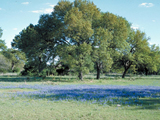
More Diseases and Disorders Questions
Controlling nematodes on lantana from San Antonio
September 19, 2012 - Can anything be done to "fix" root knot nematode on older lantana. Next to other lantana. Pull them out or try organic fix?
view the full question and answer
Lantana in hanging basket not blooming in Dover PA
June 23, 2010 - We have a lantana Bandana trailing gold in a hanging planter in full sun. It hardly blooms. Any suggestions?
view the full question and answer
Diseased non-native red tip photinias from Richmond VA
April 08, 2014 - Our red tip trees have a while substance on the bark at the base of each tree..look like some kind of fungus or mold, but we don't know how to get rid of it.
Please help.
view the full question and answer
Control of live oak suckers by cutting
July 23, 2007 - How do I control the Live Oak root suckers? At the moment we are cutting them as they come out of the ground.
view the full question and answer
Problems with Live Oak in Boerne TX
April 24, 2011 - I had my large Live Oak trimmed last year. This spring there seems to be a problem with leaf growth. Most leaves are small in nature and appear to have been attacked possibly by bugs. Many of the bran...
view the full question and answer
| Support the Wildflower Center by Donating Online or Becoming a Member today. |